

If you've ever had a fix and flip deal rejected and wondered why, chances are you ran headfirst into the twin gatekeepers of hard money lending: LTC and LTV. These aren't just alphabet soup acronyms lenders throw around to sound smart, they're the actual mathematical formulas that determine whether your deal gets funded or gets ghosted.
Here's the thing: most investors pitch their deals focusing on the wrong numbers. They talk about profit margins and ARV all day long, but they forget that lenders aren't your business partners, they're risk managers with calculators. And those calculators are programmed with specific formulas that either light up green or flash red the moment your deal crosses their desk.
Let's pull back the curtain and show you exactly how lenders at places like Emerald Capital Funding evaluate your fix and flip deals. Once you understand the math, you'll know how to structure your deals for approval before you ever hit "submit."
What Is LTC (And Why It's Your First Hurdle)
Loan-to-Cost (LTC) is the percentage of your total project cost that a lender is willing to finance. Think of it as the lender's way of making sure you have real skin in the game.
Here's the simple formula:
Maximum Loan Amount = LTC % × (Purchase Price + Renovation Budget)
Most fix and flip lenders offer LTC ratios between 70% and 90%, depending on your experience level, the property type, and the lender's risk appetite. New investors typically see 75% LTC, while seasoned flippers with proven track records might score 85-90%.

Let's say you find a distressed property for $150,000 and your contractor quotes $50,000 for renovations. Your total project cost is $200,000. If your lender offers 75% LTC, here's the math:
$150,000 (purchase) + $50,000 (rehab) = $200,000 total cost
75% × $200,000 = $150,000 maximum loan
That means you need to bring $50,000 of your own cash to the table. This is non-negotiable. The lender isn't going to suddenly become generous because you found a "great deal", the formula is the formula.
The Plot Twist: Meet the ARV LTV Cap
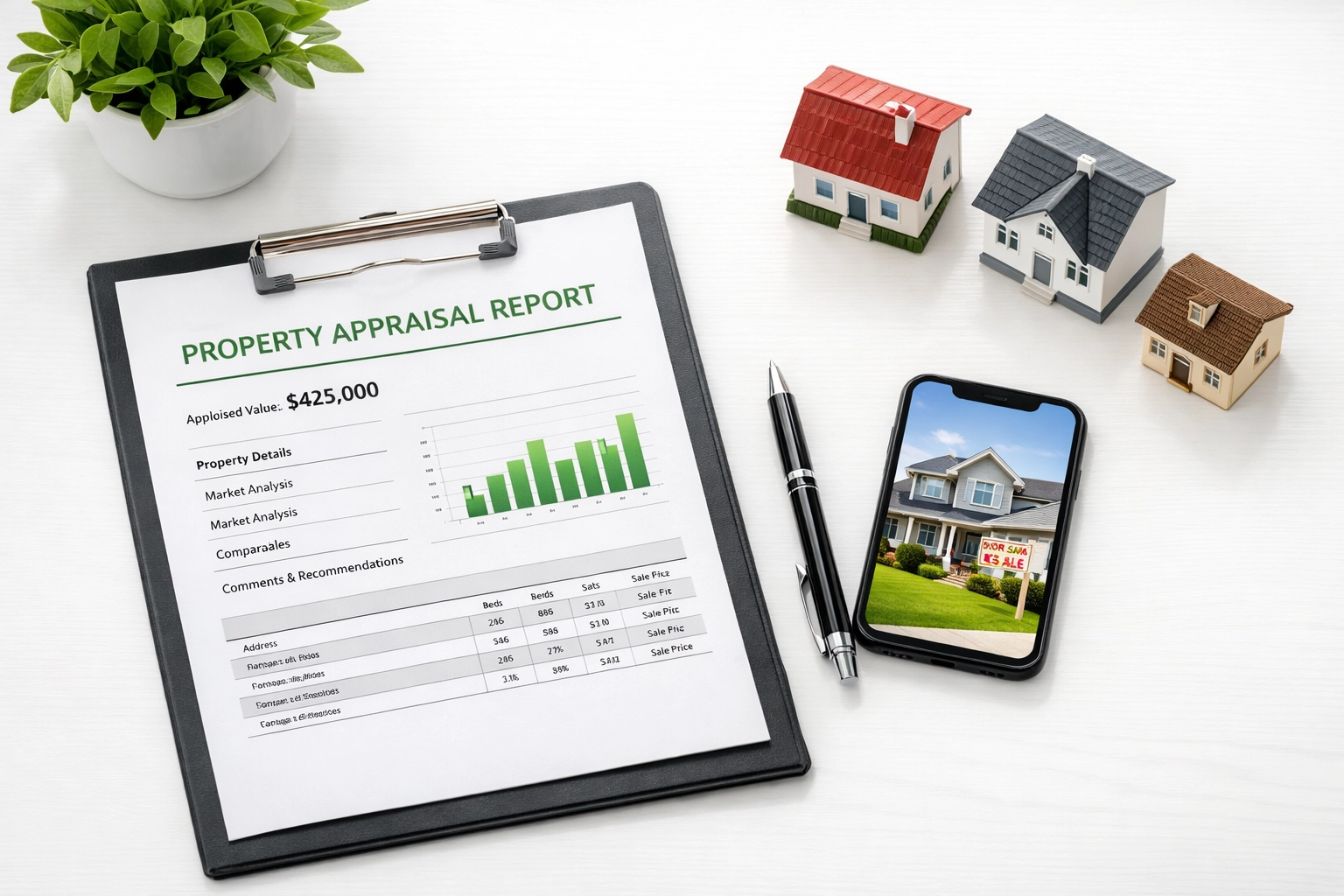
Here's where it gets interesting (and where many deals die). Lenders don't just calculate LTC and call it a day. They also run a second calculation based on your After-Repair Value (ARV) using a metric called LTV (Loan-to-Value).
The ARV LTV formula looks like this:
Maximum Loan Amount = LTV % × After-Repair Value
Most lenders cap ARV LTV at 70-75% for fix and flip loans. Using our example above, let's say your ARV is $280,000 and the lender uses a 70% ARV LTV cap:
70% × $280,000 = $196,000 maximum loan based on ARV
Now here's the kicker: the lender will always choose the lower of the two numbers.
In this scenario:
- LTC gives you: $150,000
- ARV LTV gives you: $196,000
You get $150,000 because it's the lower figure. The LTC was your limiting factor.

When the ARV LTV Becomes Your Enemy
Let's flip the scenario. Same property, same purchase price, same renovation budget, but this time your ARV is only $220,000 (maybe you were a bit optimistic, or the market shifted).
LTC calculation: 75% × $200,000 = $150,000
ARV LTV calculation: 70% × $220,000 = $154,000
You'd still get $150,000 because it's the lower number. But notice how close these numbers are getting? If your ARV was just $10,000 lower at $210,000, your ARV LTV would drop to $147,000, meaning you'd only get $147,000 in financing, even though the LTC formula says you should get $150,000.
This is why lenders order their own appraisals and why they're so skeptical of your contractor's ARV estimates. They're not being difficult, they're protecting themselves from overleveraging on a property that might not be worth what you think it is.
Why This Dual-Constraint System Exists
You might be wondering why lenders bother with two separate calculations instead of just picking one. It's simple: they're covering their bases from two different angles.
The LTC ratio ensures you contribute meaningful capital upfront. If you only put in 10% of the project cost and things go sideways, you might just walk away. But if you've got $50,000 of your own money on the line? You're far more likely to see the project through.
The ARV LTV cap protects the lender if your property value estimate is inflated. Real estate markets can shift, renovations can miss the mark, and comparable sales can be misleading. By capping the loan at 70-75% of ARV, the lender ensures they can recoup their investment even if they have to foreclose and sell at a discount.
How to Present Your Deal for Approval
Now that you understand the math, here's how to structure your deal presentation to maximize your approval odds:
1. Be Conservative with Your ARV
Use actual comparable sales from the past 90 days, not aspirational pricing. If anything, round down slightly. Lenders will verify this anyway, and being realistic builds trust.
2. Show Your Renovation Budget in Detail
Don't just throw out a round number. Break it down by line item with contractor bids. This shows you've done your homework and aren't just guessing.
3. Demonstrate Your Cash Reserves
Have proof you can cover your down payment plus at least 3-6 months of holding costs. Lenders want to see you can weather delays without defaulting.
4. Highlight Your Experience
If you've successfully completed previous flips, showcase them. Track record matters. If you're new, partner with an experienced flipper or bring a detailed project plan.
5. Run the Numbers Before You Apply
Don't wait for a lender to reject your deal. Calculate both your LTC and ARV LTV limits beforehand using conservative assumptions. If the numbers don't work, restructure the deal or walk away.
Common Mistakes That Trigger Rejection
Overestimating ARV: This is the number one killer. Investors get emotionally attached to their deals and inflate values. Use conservative comps and adjust for market conditions.
Underestimating Renovation Costs: That $50,000 budget can easily become $70,000 once you start opening walls. Pad your estimates by 15-20% for contingencies.
Ignoring the Lower-of-Two Rule: Some investors run the LTC calculation, see they can borrow 75%, and assume they're golden. Then they're shocked when the ARV LTV cap reduces their financing.
Insufficient Cash Reserves: Even if the loan math works, lenders want to see you have breathing room. Running into a project with zero cushion is a red flag.
Poor Property Selection: Some properties just don't fit fix and flip financing parameters. Properties in declining markets, oversaturated areas, or with title issues will get rejected regardless of the math.
Q&A: Your Burning LTC Questions Answered
Q: Can I negotiate a higher LTC ratio?
A: Sometimes, yes, but only if you bring compensating factors like significant experience, strong credit, substantial reserves, or properties in prime markets. Don't expect first-time flippers to get 90% LTC.
Q: What if my renovation budget increases mid-project?
A: Most lenders won't increase your loan after closing. You'll need to cover overruns with your own capital. This is why conservative budgeting matters.
Q: Do all lenders use the same LTC and LTV percentages?
A: No. Each lender sets their own parameters based on risk tolerance. Shop around, but understand that significantly higher ratios usually come with higher interest rates or points.
Q: How quickly can I get funded once I understand these formulas?
A: With the right lender and complete documentation, fix and flip loans can close in 7-14 days. The math itself is instant: it's the due diligence that takes time.
Q: What's the minimum down payment I should expect?
A: Plan for at least 20-25% of total project cost for most fix and flip deals. Experienced investors might get away with 15%, but 25% is the safe assumption for planning purposes.

The Bottom Line
The math lenders use isn't designed to keep you out: it's designed to keep bad deals out. Once you understand the dual-constraint system of LTC and ARV LTV, you can structure your fix and flip projects to align with what lenders are actually looking for.
Run your numbers conservatively. Build in cushions. Present detailed, realistic projections. And remember: the goal isn't to maximize your leverage: it's to get funded on deals that actually make money.
When you approach your next flip with this knowledge, you'll stop guessing why deals get approved or rejected. You'll know. And that knowledge is the difference between investors who struggle to find financing and investors who get deals funded consistently.
Ready to Get Your Fix and Flip Funded?
At Emerald Capital Funding, we work with investors who understand the numbers and want a straight-shooting lender who won't waste their time. If you've got a deal that pencils out and you're ready to move quickly, let's talk. We close fix and flip loans fast because we know your profits are sitting in that renovation timeline: not stuck in endless underwriting.
Check out our Fix & Flip Loan Basics page to learn more about our programs, or reach out directly to discuss your next project. The calculator is ready. The question is: is your deal?