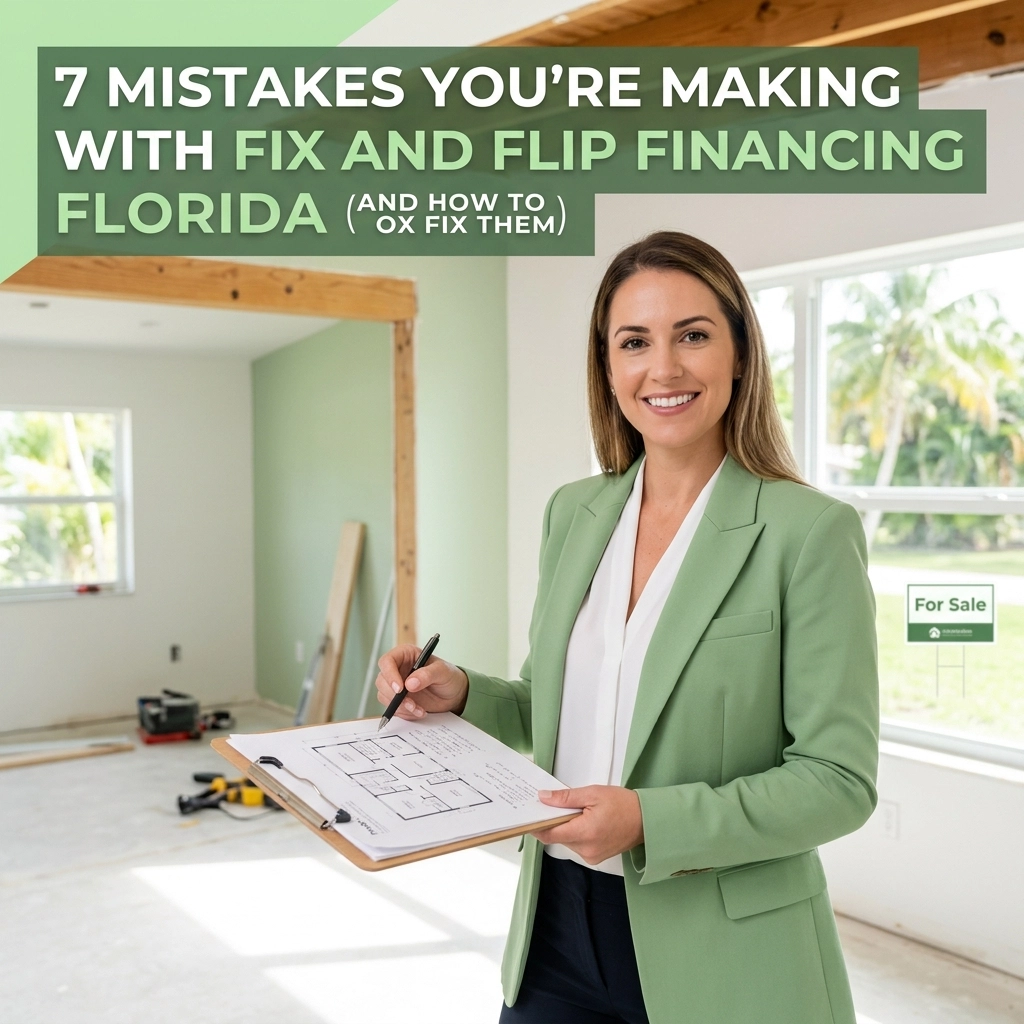

Welcome to the world of Florida real estate investing! If you’re considering diving into the Sunshine State’s fix-and-flip market, you’ve probably already realized two things: the potential for profit is massive, and the humidity isn’t the only thing that can make you sweat.
Florida’s market is unique. From the high-velocity condos of Miami to the historic bungalows of Tampa, there is money to be made everywhere. However, even the most seasoned investors can trip up when it comes to the numbers. Financing a flip isn't just about getting a check; it’s about structuring a deal that doesn’t eat your margins alive.
In this guide, we’re going to walk through the seven most common mistakes investors make with fix and flip financing Florida and, more importantly, how you can avoid them to ensure your next project is a home run. We’ve got you covered.
1. Underestimating the "Florida Factor" in Renovation Costs
If you’re considering a flip, you know that your renovation budget is the backbone of your project. The biggest mistake? Focusing only on the purchase price and forgetting that Florida houses have "secrets." Between hidden mold from the humidity, outdated electrical systems in older coastal homes, and the ever-changing hurricane code requirements, costs can spiral quickly.
The Fix:
Before you even look at a hard money loan Florida application, get at least three detailed estimates from licensed contractors. Don't just settle for a ballpark figure.
- Actionable Takeaway: Build a 15–20% "contingency buffer" into your renovation budget. If you don’t use it, that’s just extra profit in your pocket. If you do, it’s the difference between finishing the project and stalling out halfway.

2. Ignoring the "Invisible" Drain: Holding Costs
Many investors get so focused on the "buy" and the "sell" that they forget about the "middle." Holding costs, property taxes, utilities, and the big one: insurance, can be brutal in Florida. With property insurance rates fluctuating and taxes being reassessed, these monthly drains can turn a profitable flip into a break-even headache if your timeline gets pushed back.
The Fix:
Create a comprehensive renovation timeline and add two months to it (trust us, permits take time). Calculate every month of interest on your loan, insurance premiums, and utility bills.
- Actionable Takeaway: Factor these costs into your initial ARV (After-Repair Value) calculations. If the deal doesn't make sense with a six-month hold time, it’s probably not a deal you want to chase.
3. Overestimating the ARV (After-Repair Value)
We’ve all seen it: an investor looks at a beautiful house three miles away and thinks, "My house will sell for that!" In Florida, a few blocks can mean a six-figure difference in value. Setting an unrealistic ARV is a fast track to a financing disaster because your lender is going to base your loan-to-value (LTV) on a realistic appraisal, not your hopes and dreams.
The Fix:
Do your homework using recent comparable sales (comps) from the last 90–180 days within a 0.5-mile radius of your property.
- Actionable Takeaway: Hire a local professional or a savvy realtor who knows the nuances of the specific Florida neighborhood you’re in. Don’t rely solely on Zillow’s "Zestimate", it doesn’t know that the house across the street has a brand-new roof and yours doesn’t.

4. Choosing the Wrong Lending Partner
Not all lenders are created equal. Some investors chase the lowest interest rate only to find out the lender has "junk fees," slow funding times, or doesn't understand the Florida market. In a state where properties move fast, a delay in funding can mean losing a deal to a cash buyer.
The Fix:
Work with a lender who specializes in fix and flip financing Florida. You need someone who can close in days, not weeks. Check out our About Us page to see how we prioritize speed and transparency.
- Actionable Takeaway: Ask your lender about their "draw" process. How fast can they get you renovation funds once a milestone is met? If the answer is "a few weeks," run the other way.
5. Not Understanding Your Loan Terms
A hard money loan Florida is a powerful tool, but it’s different from a traditional 30-year mortgage. Many investors fail to realize they are signing up for interest-only payments or that there might be a "prepayment penalty" if they sell the house too quickly (though many hard money loans don't have these).
With that said, you need to know exactly what you’re paying for. Are there points upfront? Is the interest rate fixed or variable?
The Fix:
Read the Term Sheet carefully. If you don’t understand a term like "origination points" or "LTC" (Loan to Cost), ask.
- Actionable Takeaway: Before signing, ensure you understand the total cost of borrowing. A slightly higher interest rate with lower upfront fees might actually be better for your cash flow than the reverse.

6. Overleveraging Your Personal Finances
It’s tempting to put every cent you have into a flip, thinking you’ll get it all back in four months. But what happens if the HVAC dies or the market cools off for a month? Using too much borrowed capital without keeping cash reserves puts your entire project at risk.
The Fix:
Don't rely 100% on the loan. Even with high-leverage financing, you should have liquid reserves to cover at least three to four months of holding costs and emergency repairs.
- Actionable Takeaway: Aim to keep at least 10% of the project's total cost in a liquid savings account. This "sleep-well-at-night" fund ensures you aren't making desperate decisions if things get bumpy.
7. Paying Too Much for the Property (Ignoring the 70% Rule)
In a competitive market like Florida, it’s easy to get into a bidding war. But remember: you make your money when you buy, not just when you sell. If you pay too much at the acquisition stage, you’ve already capped your potential profit.
The Fix:
Stick to the 70% rule (or a variation of it suited for your specific market). Generally, you shouldn't pay more than 70% of the ARV minus the cost of repairs.
- Actionable Takeaway: Be prepared to walk away. There will always be another house. If the math doesn't work, the deal doesn't work. Check out our services to see how we help you evaluate these numbers.
Common Questions About Florida Fix and Flip Financing (Q&A)
Q: Can I get a fix and flip loan in Florida with bad credit?
A: Yes! Hard money lenders focus more on the value of the property (the collateral) than your personal credit score. While a better score can get you better rates, the deal itself is the star of the show.
Q: How fast can I get a hard money loan Florida?
A: At Emerald Capital Funding, we pride ourselves on speed. While traditional banks take 45–60 days, we can often fund in as little as 7–10 days once we have the necessary paperwork.
Q: Do I need to have a contractor already lined up?
A: It’s highly recommended. Most lenders will want to see a detailed "Scope of Work" (SOW) before approving the renovation portion of your loan.
Q: What is the typical down payment for a flip in Florida?
A: Usually, you can expect to put down 10% to 20% of the purchase price. Some programs allow for even less if you have a strong track record of successful flips.
Your Pathway to Florida Flipping Success
Fixing and flipping in Florida is an incredible way to build wealth, but it requires a systematic, step-by-step approach. By avoiding these seven common pitfalls, you’re already ahead of the competition. Remember, success is within your reach when you have the right numbers and the right partners.
Don't let financing be the thing that holds you back. Whether you're eyeing a project in Jacksonville, Orlando, or the Keys, we're here to help you navigate the waters.
Ready to start your next Florida project? Apply Now and let’s get those funds moving!
Meet Your Lending Partner
When you work with Emerald Capital Funding, you aren’t just getting a loan; you’re getting a team that’s as invested in your success as you are.
Bill Nicholson – Mortgage Lender
Bill is the guy you want in your corner when the clock is ticking. With years of experience in the lending world, he knows how to cut through the red tape and get deals closed. He’s all about clear communication and making sure you have the leverage you need to win the bid.
Jill Nicholson – Lending Specialist
Jill brings experience, organization, and a steady hand to the lending process. She helps keep deals moving smoothly and makes sure borrowers know what’s happening at every step. When you need someone detail-oriented and responsive, Jill is a great person to have on your side.
Mackenzie – Lending Specialist
Mackenzie is the engine that keeps the train on the tracks. She specializes in the nuances of Florida and Pennsylvania markets, ensuring that every piece of the puzzle: from appraisals to draws: is handled with precision. She’s your go-to for making the complex feel simple.
Want to chat about a deal? Contact us today and let's make it happen!