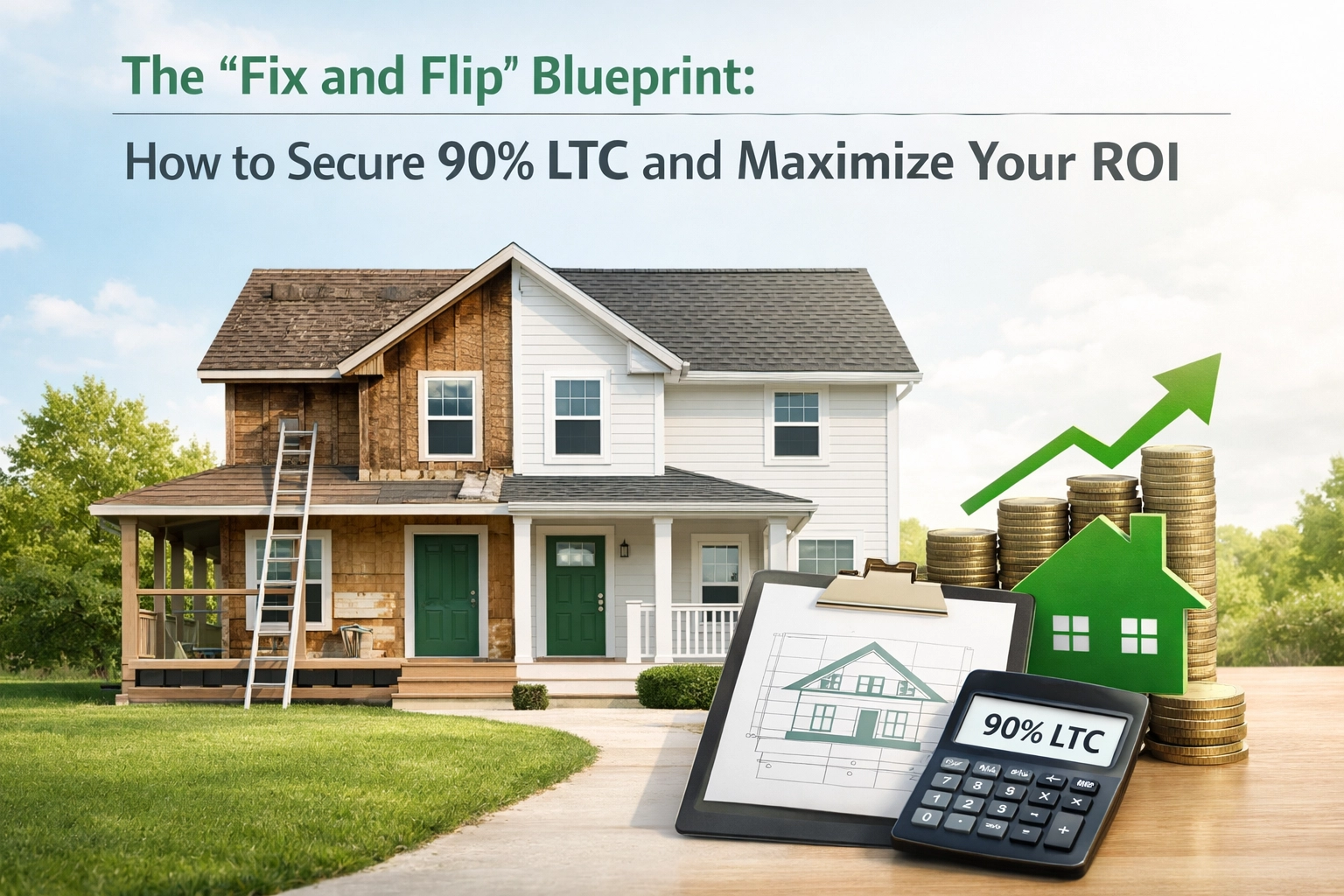

If you’re considering diving into the fast-paced world of real estate renovation or you're a seasoned pro looking to optimize your capital, welcome. You’ve probably seen the "Before and After" photos that make fix-and-flip investing look like a breeze, but behind every successful transformation is a rock-solid financial strategy. In 2026, the market doesn't just reward those with an eye for design; it rewards those with the best leverage.
At Emerald Capital Funding, we see investors every day who have found the "perfect" property but struggle to find the right way to pay for it. This guide will equip you with the tactical knowledge you need to master fix and flip financing, specifically focusing on how to secure 90% Loan-to-Cost (LTC) and 100% of your rehab funds. With the right approach, success is well within your reach.
Understanding the Fundamentals: LTC vs. LTV
Before we dive into the deep end, it’s vital to understand the language of the trade. If you’ve dealt with traditional mortgages, you’re used to LTV (Loan-to-Value). However, in the world of hard money loans, we talk about LTC.
- LTV (Loan-to-Value): This is based on the appraised value of the property.
- LTC (Loan-to-Cost): This is based on the total cost of the project: the purchase price plus the renovation budget.
Why does this matter? Because 90% LTC means you are only bringing 10% of the total project cost to the closing table as a down payment. This preserves your liquidity, allowing you to move onto your next deal faster. For a more detailed breakdown, check out our fix and flip loan basics.
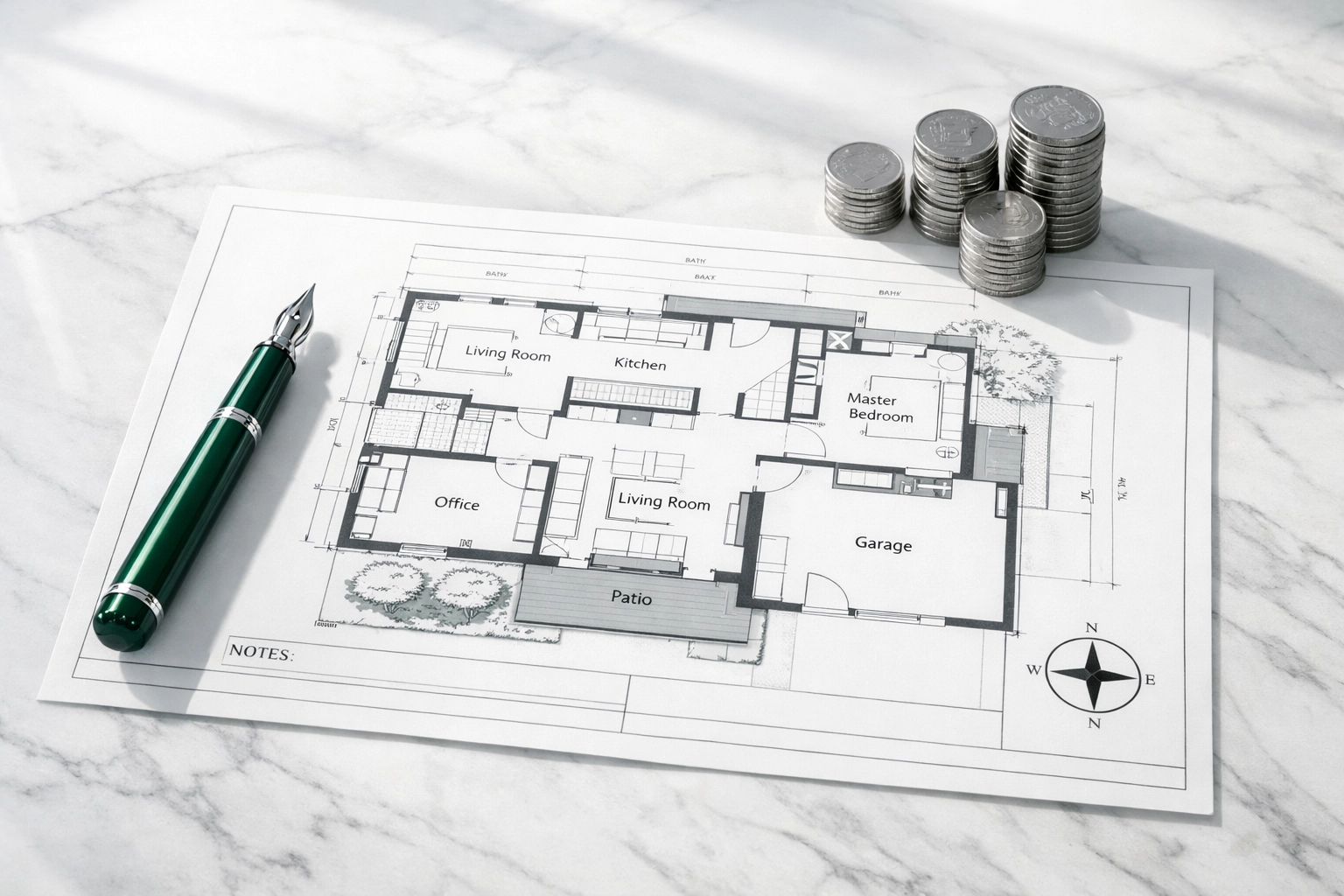
The Power of 90% LTC and 100% Rehab Funding
In the current lending landscape, the "Emerald Advantage" is built on maximizing your leverage. Most traditional banks will look at a fix-and-flip project and see too much risk. They might offer 65% or 70% of the purchase price and expect you to fund the entire renovation out of pocket.
At Emerald Capital Funding, we flip that script. We offer:
- Up to 90% LTC on the purchase price.
- 100% of the renovation costs.
By funding 100% of the rehab, we ensure that your capital isn't tied up in drywall and plumbing. Instead, that money stays in your bank account as a safety net or as a down payment for your next project. This level of financing is a pathway to financial security because it allows you to scale your business rather than just doing one house at a time.
How the Math Works: An Example
Imagine you find a distressed property for $200,000 that needs $50,000 in work. The After-Repair Value (ARV) is estimated at $350,000.
- Total Project Cost: $250,000.
- 90% LTC Financing: We provide $225,000.
- Your Down Payment: Only $25,000 (plus closing costs).
Compare that to a traditional loan where you might need $60,000 for the down payment and $50,000 for the rehab: a total of $110,000 out of pocket. With our fix-and-flip secrets revealed, you keep an extra $85,000 in your pocket.
Strategic Planning to Maximize Your ROI
Securing the loan is only half the battle; maximizing your Return on Investment (ROI) is where the real money is made. To achieve your financial goals, you need a systematic, step-by-step approach to the project itself.
1. The 70% Rule Still Reigns
While 2026 has brought new market dynamics, the "70% Rule" remains a gold standard for professional flippers. The rule suggests that you should never pay more than 70% of the ARV, minus the cost of repairs.
- Formula: (ARV x 0.70) – Rehab Costs = Maximum Purchase Price.
Using this formula helps you build in a "margin of safety" for the unexpected costs that inevitably arise.
2. Time is Your Greatest Expense
In the world of hard money loans, interest is a carrying cost. Every day the house sits empty is a day you are paying for utilities, insurance, property taxes, and loan interest.
- Pro Tip: Have your contractors lined up before you close.
- Pro Tip: Secure permits early.
By shaving just 30 days off your renovation timeline, you can significantly boost your net profit.
3. Focus on "High Impact" Renovations
Don't over-improve for the neighborhood. If the comps in the area have laminate countertops, installing Carrara marble won't necessarily increase your ARV, but it will definitely decrease your ROI. Focus on:
- Kitchen updates (cabinets, hardware, lighting).
- Bathroom refreshes.
- Curb appeal (landscaping and exterior paint).
- Clean, neutral interior paint and modern flooring.
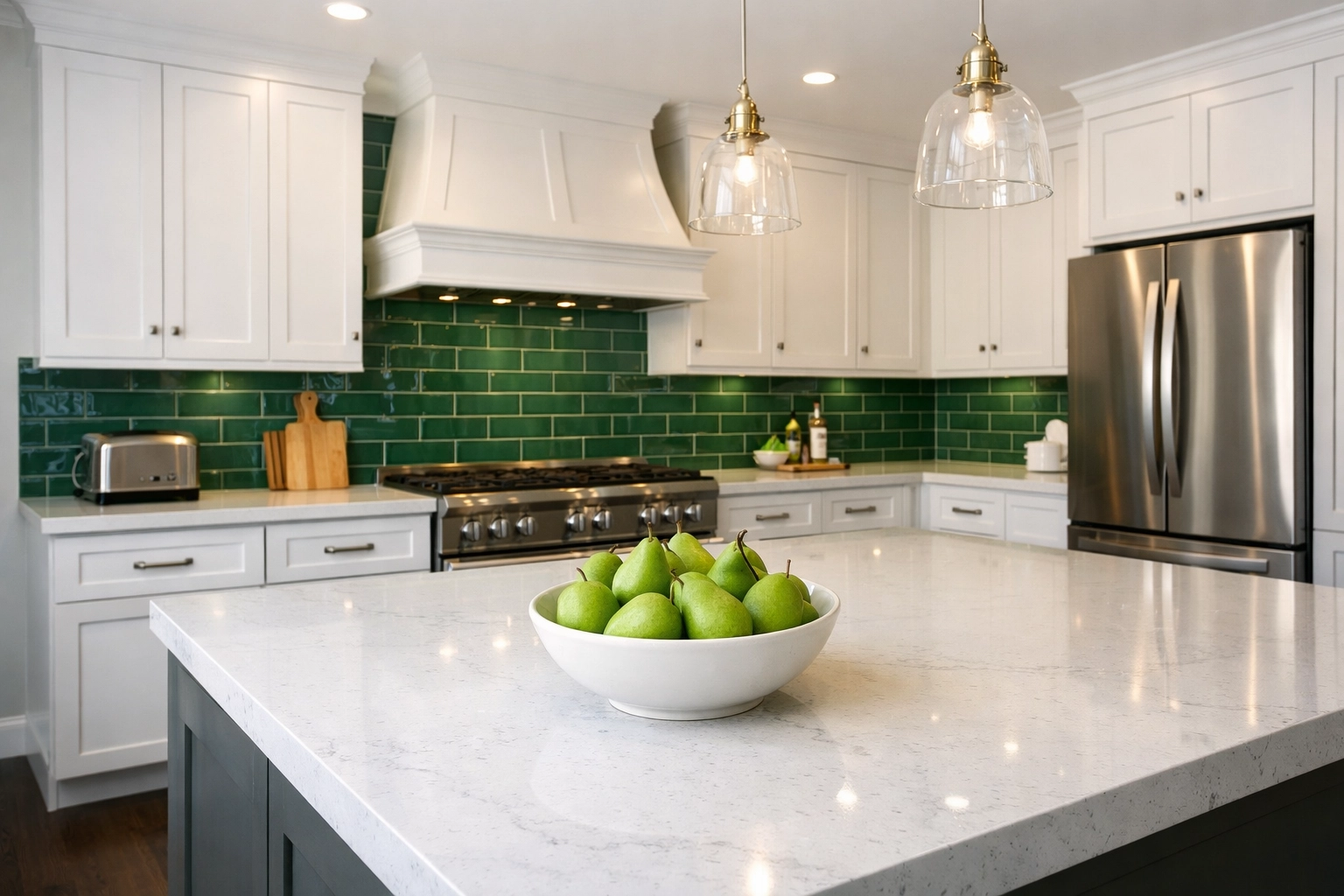
Speed: Your Secret Weapon in 2026
If you've ever tried to get a construction loan from a big-box bank, you know it's a slow slog. They want three years of tax returns, your high school transcripts, and a month to "review the file." In the time it takes them to open your email, a cash buyer or an investor with Emerald Capital Funding has already closed the deal.
We focus on the property and your experience, not just your personal debt-to-income ratio. This is why conventional loan rehab vs. hard money isn't even a fair fight when it comes to speed. We move at the speed of the market, often closing in as little as 7 to 10 days.
Common Pitfalls to Avoid
Even with 90% LTC, things can go sideways if you aren't careful. Don't worry, though: most of these are preventable with a bit of foresight.
- Underestimating Rehab Costs: Always add a 10-15% contingency to your budget for "unforeseen issues" (like the termites behind the shower wall).
- Overestimating the ARV: Be conservative. Use recent sales within the last six months and stay within a half-mile radius.
- Skipping the Inspection: Even if you’re buying "as-is," get an inspection so you know exactly what you’re getting into.
For more on this, check out our guide on common fix-flip mistakes.

The "Exit" Strategy: Selling vs. Refinancing
Once the renovation is complete, you have two primary options: Sell for a profit or keep it as a rental.
If the market is hot, selling is the fastest way to realize your ROI. However, many investors are now opting for the BRRRR strategy (Buy, Rehab, Rent, Refinance, Repeat). Once your flip is finished, you can transition from your short-term hard money loan into a long-term DSCR loan.
A DSCR loan allows you to pull your initial capital back out of the deal based on the new, higher value of the home, allowing you to grow your portfolio without needing fresh cash for every deal. We even have a 90-day BRRRR timeline guide to help you manage that transition perfectly.
Q&A: Fix and Flip Financing
Q: Does Emerald Capital Funding require a minimum credit score for 90% LTC?
A: While we look at credit, we are primarily asset-based lenders. We care more about the deal’s profitability and your track record. Generally, a score of 660+ gets you the best terms, but we have options for various profiles.
Q: How do "draws" work for the 100% rehab funding?
A: Once you complete a specific stage of work (e.g., plumbing and electrical), you request a draw. We send an inspector to verify the work, and then funds are released to you. It’s a transparent process designed to keep the project moving.
Q: Can I use this for a multi-family property?
A: Absolutely. We handle everything from single-family homes to 5+ unit commercial multi-family.
Q: What if I have no experience flipping houses?
A: We love working with new investors! While your leverage might be slightly lower on your first deal (e.g., 80-85% LTC), we provide the same speed and support to help you get that first win under your belt.

Take Action Today
The difference between a "dream" and a "deal" is the financing behind it. With 90% LTC and 100% rehab funding, you can stop dreaming about flipping houses and start building a real estate empire.
Whether you’re looking at a small condo in the suburbs or a massive transformation in Norristown, PA, Emerald Capital Funding is ready to be your partner in growth. We’ve got you covered with the capital, the speed, and the expertise to ensure your next flip is a resounding success.
Ready to see what you qualify for? Apply Now and let’s get your next project funded. Your pathway to financial security starts with one smart move. Let’s make it happen together.