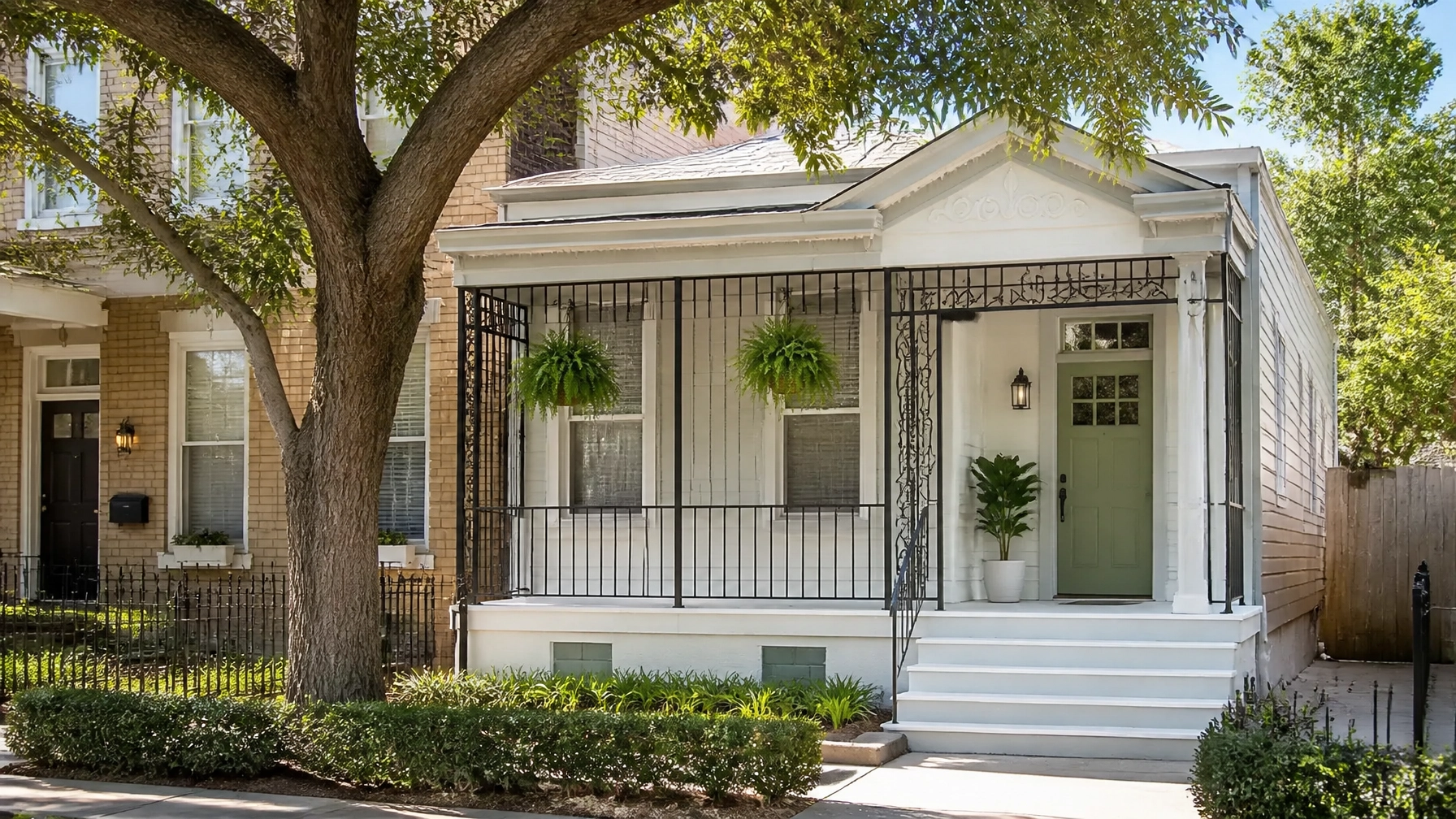

If you're considering New Orleans real estate investing, Louisiana may look like a market where every deal requires extra caution, and that assessment is fair. Insurance, flood exposure, aging housing stock, and changing rental demand can quickly affect your returns.
But the opportunity does not end in New Orleans.
From the Baton Rouge Belt to Lafayette and wider Cajun Country, investors can find properties with lower entry prices, practical rental demand, and stronger cash-flow potential when they underwrite carefully. With the right financing strategy, including a DSCR loan in Louisiana or a hard money loan in Louisiana, success can be within your reach.
This guide will show you how to evaluate the opportunity, structure your financing, and avoid common mistakes.
Why Louisiana Deserves a Closer Look
Louisiana is not automatically a high-yield market. Instead, it is a deal-by-deal market where the right neighborhood, property type, insurance quote, and financing structure make a substantial difference.
Recent rental-market benchmarks show:
- New Orleans apartment rents often fall in the $1,280–$1,400 monthly range, while all-property averages can be higher depending on the data source and property type.
- Baton Rouge apartment rents were reported near $1,279 per month in late 2025.
- Lafayette and surrounding Cajun Country markets commonly show purchase prices around $170,000–$230,000, with rents ranging from approximately $1,150–$1,550.
- Reported cap rates in Lafayette have generally ranged from roughly 4% to 7%, depending on the asset and underwriting assumptions.
You can review current rental benchmarks through Zillow Rental Manager, RentCafe’s New Orleans market data, and PropertyDNA’s cash-flow market analysis.
These figures are market references, not guarantees. Your actual result will depend on the property’s condition, rentability, taxes, insurance, management, debt service, and purchase price.
Actionable takeaway
Before you make an offer, build your underwriting around property-specific numbers rather than citywide averages. Obtain an insurance quote, verify rental comparables, and calculate your projected DSCR before committing.
New Orleans Real Estate Investing: Look for Value, Not Just Visibility
New Orleans attracts investors for understandable reasons: historic neighborhoods, strong cultural identity, tourism, healthcare, education, and a broad range of housing stock.
However, attractive architecture does not automatically create attractive cash flow.
Insurance and flood exposure can materially change the economics of a New Orleans rental. Some properties that appear profitable using rent and mortgage estimates may become marginal after including:
- Property insurance
- Flood insurance
- Property taxes
- Vacancy
- Repairs and capital expenditures
- Professional management
- Utilities or owner-paid services
- Higher maintenance costs for older homes
Apartment rent data has remained mixed, with many sources showing flat or slightly declining rents in certain segments. That means you should be cautious about assuming aggressive rent growth will solve a thin deal.
The strongest New Orleans opportunities may come from:
- Buying below replacement cost through an off-market or distressed acquisition.
- Small multifamily properties with multiple income streams.
- Cosmetic value-add projects that improve rentability without excessive structural risk.
- Properties with verified flood history and manageable insurance costs.
- Neighborhoods where long-term rental demand is stronger than speculative short-term rental projections.
Short-term rentals can produce higher gross revenue, but they also involve regulation, licensing, occupancy volatility, furnishing costs, and active management. Treat an Airbnb projection as a specialized business plan, not as a default DSCR strategy.

Your New Orleans due-diligence checklist
Before closing, confirm:
- The FEMA flood zone and available elevation information.
- Current property, liability, and flood insurance quotes.
- The property’s claims and repair history.
- Permitted use, zoning, and any short-term rental restrictions.
- At least three current rental comparables.
- A realistic reserve for repairs and capital expenses.
The Louisiana Department of Insurance flood-insurance guidance and FEMA flood-map resources can help you begin this process.
Actionable takeaway
In New Orleans, do not ask only, “What can this property rent for?” Ask, “What remains after insurance, reserves, management, and debt service?”
The Baton Rouge Belt: A More Practical Cash-Flow Conversation
Baton Rouge offers a different investment profile. The market can provide access to employment centers, universities, healthcare, government, and everyday rental demand without requiring you to depend entirely on tourism.
The broader Baton Rouge Belt may include areas such as:
- Central Baton Rouge
- Mid City and surrounding neighborhoods
- Denham Springs
- Prairieville
- Gonzales
- Zachary
- Select areas along the I-10 and I-12 corridors
Each submarket has its own risks. For example, a property in an area with lower purchase prices may still carry elevated flood exposure, insurance costs, or slower lease-up. You should evaluate the exact address rather than relying on the reputation of the broader metro.
Baton Rouge can be particularly interesting for investors seeking:
- Single-family rentals near employment and education centers
- Duplexes and fourplexes with multiple rent streams
- Moderate renovation projects
- Long-term rental strategies
- BRRRR opportunities where the stabilized value supports refinancing
A hard money loan in Louisiana may help you move quickly on a property that needs repairs. Hard money financing is generally asset-based and designed for short-term acquisition or renovation. Emerald Capital Funding offers programs with loan amounts starting at $50,000, terms of up to 15 months, and loan-to-cost options of up to 90%, depending on the program and approval.
Once the property is renovated and rented, a DSCR loan in Louisiana may provide a longer-term exit. DSCR underwriting focuses primarily on the property’s rental income relative to its debt obligations rather than requiring traditional personal-income documentation.

Actionable takeaway
When comparing Baton Rouge properties, focus on the income per dollar invested. A lower-priced property is not necessarily better; the winning deal is the one that maintains healthy cash flow after realistic expenses.
Cajun Country: Lower Entry Points and Room to Add Value
Lafayette and surrounding Cajun Country communities deserve attention from investors who want to balance affordability and rental demand.
The region may offer:
- Lower acquisition prices than many larger metros
- Single-family and small multifamily opportunities
- Demand from healthcare, education, energy, manufacturing, and local businesses
- Room for cosmetic improvements and better property management
- Potentially more manageable insurance costs than certain high-risk coastal locations
That does not mean every property will cash flow. Older homes may require substantial repairs, and some smaller markets have fewer comparable rentals. You should verify tenant demand at the neighborhood level.
A successful Cajun Country strategy often starts with a simple question:
Can you improve the property enough to increase rent and value without over-improving for the neighborhood?
Practical improvements may include:
- Updated kitchens and bathrooms
- Durable flooring
- Fresh paint and improved lighting
- Better landscaping and exterior maintenance
- Additional bedrooms where legally permitted
- Improved tenant screening and property management

Actionable takeaway
Use local rental comparables to identify the improvements tenants will actually pay for. Avoid spending $50,000 on upgrades that add only $100 per month in rent.
Worked Example: A Baton Rouge Belt BRRRR Strategy
Consider this illustrative four-unit acquisition. These numbers are for education only and are not a loan quote or market guarantee.
Acquisition and renovation
- Purchase price: $280,000
- Renovation budget: $35,000
- Estimated closing and holding costs: $15,000
- Total project basis: $330,000
- Stabilized rent: $1,100 per unit
- Gross monthly rent: $4,400
- Estimated after-repair value: $400,000
A hard money program financing 90% of the purchase price plus renovation would provide approximately:
- Eligible acquisition and renovation costs: $315,000
- Illustrative loan amount at 90%: $283,500
- Estimated equity toward those costs: $31,500
- Additional cash needed for closing and holding costs: approximately $15,000
The actual structure depends on the lender, property, borrower experience, appraisal, reserves, and program guidelines.
Stabilized rental analysis
Assume monthly operating expenses of:
- Vacancy reserve: $220
- Property taxes: $350
- Insurance: $300
- Maintenance reserve: $352
- Property management: $352
- Utilities and miscellaneous expenses: $300
Estimated monthly operating expenses total $1,574, producing an estimated NOI of:
- Gross rent: $4,400
- Less operating expenses: $1,574
- Estimated NOI: $2,826
If the property later qualifies for a DSCR refinance at 75% of a $400,000 appraised value:
- New loan amount: $300,000
- Illustrative principal and interest payment at 7.5% over 30 years: approximately $2,098
- Estimated DSCR: 1.35
- Estimated monthly cash flow before income taxes and major capital expenditures: approximately $728
This is the type of structure BRRRR investors look for: acquire and improve with short-term financing, stabilize the rental income, then refinance with a longer-term rental loan. Emerald Capital Funding specializes in financing strategies for the BRRRR method and offers rental-property programs for eligible single-family, multifamily, condominium, townhome, and properties up to 10 units.
How to Choose Between Hard Money and DSCR Financing
Use the financing tool that matches the stage of your project.
Hard money may be appropriate when you need to:
- Close quickly on an acquisition
- Purchase a property requiring renovation
- Use an asset-based qualification approach
- Fund a fix-and-flip or BRRRR acquisition
- Bridge the property until stabilization
A DSCR loan may be appropriate when you want to:
- Refinance a stabilized rental
- Qualify primarily through property income
- Avoid traditional personal-income verification, subject to program guidelines
- Hold a property for long-term cash flow
- Scale a rental portfolio
Review Emerald Capital Funding’s DSCR loan information and full services before choosing a structure.
Louisiana Investment Property Q&A
Q: Is Louisiana a good state for rental property investing?
A: Louisiana can be a good fit when you select the right submarket and underwrite conservatively. New Orleans may offer strong demand but also higher insurance and operating complexity. Baton Rouge and Cajun Country may provide more accessible entry points, but each property still requires detailed analysis.
Q: What is a DSCR loan in Louisiana?
A: A DSCR loan evaluates the property’s rental income against its debt obligations. It may allow eligible investors to qualify without traditional personal-income verification, depending on the program. The lender will still review the property, borrower profile, credit, reserves, and overall transaction.
Q: Can I use a hard money loan for a Louisiana fix-and-flip?
A: Yes, hard money financing is commonly used for acquisition and renovation projects. Terms, leverage, interest, fees, and draw procedures vary, so request a transaction-specific quote before making an offer.
Q: Should I buy in New Orleans, Baton Rouge, or Lafayette?
A: Your strategy should determine the market. New Orleans may suit investors comfortable with complex due diligence and value-add opportunities. Baton Rouge may appeal to investors seeking broad employment-driven rental demand. Lafayette and Cajun Country may suit investors prioritizing lower entry prices and potential cash flow.
Q: Does Emerald Capital Funding lend in Louisiana?
A: Emerald Capital Funding provides nationwide private-money loan programs. Visit the Where We Lend page or contact the team to discuss current availability and program fit.
Your Next Step Toward Louisiana Cash Flow
Louisiana’s opportunity is not hidden because the market lacks potential. It is hidden because successful investors look beyond headline prices and rents.
You need to:
- Choose a target market and property type.
- Verify rent with local comparables.
- Obtain insurance and flood-risk information early.
- Build a complete operating budget.
- Select hard money or DSCR financing based on your project stage.
- Stress-test the deal before submitting an offer.
Don't worry if the numbers feel complex at first. With the right approach and a lending partner who understands investment property financing, your pathway to financial security can become much clearer.
Apply with Emerald Capital Funding or contact our team for a free, no-obligation discussion about your Louisiana investment strategy. We’ve got you covered from acquisition planning through stabilization and refinance.