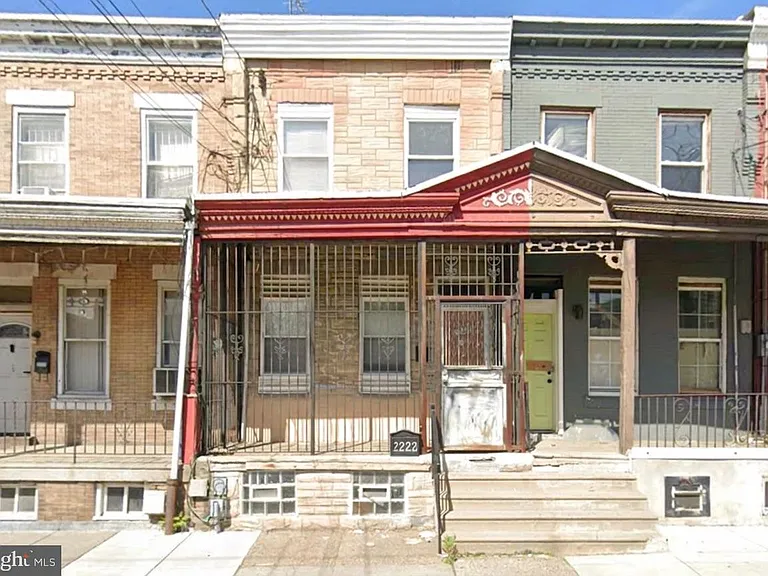

If you're considering a hard money loan in Kentucky, you may already see the opportunity: affordable entry prices, steady rental demand, and active investment markets in Louisville, Lexington, and Bourbon Country.
The financing, however, should support a clear investment plan: not replace one. This guide will equip you to evaluate the property, choose between hard money and a DSCR loan in Kentucky, and structure your exit before you close.
1. Kentucky offers multiple investment strategies: not just one market
Kentucky is not a single real estate market. Your strategy may look very different depending on the location and property type.
Louisville real estate investing
Louisville often attracts investors looking for:
- Affordable single-family rentals
- Fix-and-flip opportunities
- Small multifamily properties
- BRRRR projects
- Workforce housing near major employment centers
Recent market data places many Louisville homes in the mid-$200,000 range, with more affordable neighborhoods offering lower acquisition prices. HUD’s 2025 Louisville Housing Market Area analysis estimated an overall rental vacancy rate of 7.8% and projected demand for approximately 5,625 additional rental units over three years.
Lexington
Lexington can provide strong tenant demand supported by:
- The University of Kentucky
- Healthcare and education employment
- Professional services
- Stable long-term rental demand
- Student and small multifamily housing
Lexington may require a higher purchase price than some Louisville submarkets, so you may prioritize occupancy, tenant quality, and long-term stability over maximum immediate cash flow.
Bourbon Country
Bourbon Country: including Louisville, Lexington, and smaller communities such as Paris and Bourbon County: also creates opportunities connected to tourism and hospitality.
A property near a distillery, downtown district, or scenic rural destination might support:
- A long-term rental strategy
- A furnished mid-term rental
- A short-term rental, where permitted
- A boutique lodging or agritourism concept
Always confirm local zoning, licensing, tax, and short-term rental requirements before relying on tourism income.
Actionable takeaway: Identify your target tenant, investment strategy, and exit before you begin comparing loan offers.
2. Know when hard money is the right tool
A Kentucky hard money loan is generally a short-term, asset-based loan designed for speed and flexibility. Lenders typically focus heavily on the property, project, collateral, and exit strategy rather than relying only on traditional income documentation.
Hard money may be appropriate when you are:
- Purchasing a distressed property
- Funding renovations before resale
- Using the BRRRR method
- Competing against cash buyers
- Acquiring a property that needs substantial work
- Bridging the gap until a long-term refinance
Hard money typically carries higher costs than permanent financing, so your project needs enough margin to justify those costs.
Emerald Capital Funding offers hard money, bridge, fix-and-flip, construction, and other private money programs. You can review the differences in our hard money, bridge, and DSCR loan comparison guide.
Actionable takeaway: Use hard money for speed, acquisition, and improvements: not as a substitute for realistic project math.

3. Understand how a DSCR loan differs from hard money
A DSCR loan in Kentucky is generally intended for an income-producing investment property. DSCR stands for Debt Service Coverage Ratio, which compares the property’s qualifying rental income with its debt obligations.
Unlike many traditional loans, DSCR programs may not require personal income verification. Emerald Capital Funding’s DSCR programs evaluate the subject property’s rental income and can support eligible:
- Single-family residences
- Two- to four-unit properties
- Condominiums
- Townhomes
- Multifamily properties up to 10 units
A DSCR loan may be a better fit when the property is already stabilized and you plan to hold it as a rental. Hard money may be better during acquisition and renovation.
A common Kentucky investment sequence looks like this:
- Buy and renovate with hard money.
- Complete the improvements and lease the property.
- Stabilize rental income.
- Refinance into a DSCR loan.
- Use released capital for your next acquisition.
Review DSCR loans explained before assuming that every property will qualify. Lender requirements, valuation, rental documentation, reserves, and debt-service calculations vary.
Actionable takeaway: Match the loan to the property’s current stage: hard money for the project phase and DSCR financing for the stabilized rental phase.
4. Calculate the complete project cost
Many investors focus on the purchase price and renovation budget but overlook the costs that determine whether a deal closes profitably.
Your Kentucky project budget should include:
- Purchase price
- Renovation and construction
- Builder’s risk or other insurance
- Property taxes
- Utilities
- Loan interest
- Origination points and lender fees
- Appraisal and inspection costs
- Title and recording fees
- Permits
- Property management
- Leasing costs
- Contingency reserves
A practical contingency is often 10% to 15% of the renovation budget, depending on the property’s age and condition. Older Louisville housing stock, for example, may contain electrical, plumbing, foundation, or code issues that are not obvious during an initial walk-through.
Emerald Capital Funding offers programs with loan amounts starting at approximately $50,000 to $100,000 depending on the program, terms that may extend up to 15 months for certain hard money projects, and loan-to-cost ratios of up to 90% for qualifying scenarios. These figures are subject to underwriting and program requirements.
Actionable takeaway: Build a sources-and-uses worksheet before making an offer, and include a reserve for delays and unexpected repairs.
5. Verify the after-repair value and rental income
Your exit strategy depends on two critical figures:
- The property’s after-repair value, or ARV
- The expected stabilized rental income
For a flip, the ARV helps determine your maximum allowable offer and resale margin. For a BRRRR project, the ARV affects your refinance proceeds and available equity.
For a rental, avoid relying on one online rent estimate. Instead, compare:
- Three to five similar leased or actively marketed properties
- Unit size and bedroom count
- Renovation quality
- Parking and amenities
- Neighborhood location
- Utility responsibility
- Property management feedback
- Vacancy and leasing time
Louisville’s rental performance can vary significantly by neighborhood. A lower-priced property is not automatically a good rental if it has weak tenant demand, high maintenance costs, or difficult resale conditions.

6. Work through a Kentucky BRRRR example
Consider this illustrative Louisville BRRRR scenario:
| Project item | Assumption |
|---|---|
| Purchase price | $140,000 |
| Renovation budget | $25,000 |
| Closing and holding costs | $8,000 |
| Total project cost | $173,000 |
| Illustrative hard money financing at 90% LTC | $155,700 |
| Approximate investor contribution before reserves | $17,300 |
| Estimated ARV after renovation | $225,000 |
| Stabilized monthly rent | $1,850 |
After renovation and leasing, the investor may explore a DSCR refinance. If a lender appraises the property at $225,000 and offers 70% loan-to-value, the new loan could be approximately $157,500 before closing costs and other adjustments.
At an illustrative fixed rate of 7.75% over 30 years, principal and interest on that amount might be approximately $1,130 per month. If taxes and insurance add $250, the estimated monthly payment would be approximately $1,380.
Using a simplified rent-to-housing-payment screen:
$1,850 ÷ $1,380 = approximately 1.34 DSCR
That may appear promising, but this is not a loan approval or a complete cash-flow analysis. You still need to account for management, repairs, capital expenditures, vacancy, utilities, and lender-specific underwriting.
Actionable takeaway: Run the numbers at lower rent, higher expenses, and a longer renovation timeline. If the deal only works under perfect assumptions, keep negotiating or move on.
7. Make your contractor and renovation plan lender-ready
A lender will want to understand what you are improving, how much it will cost, and how long the work should take.
Prepare:
- A detailed scope of work
- Contractor bids
- Materials estimates
- Project milestones
- Permit requirements
- Draw schedule expectations
- Photos of existing conditions
- A realistic completion date
Do not underestimate the importance of local contractors. If you invest from outside Kentucky, establish a trusted boots-on-the-ground team before closing. A property manager, contractor, inspector, and real estate agent can help you validate both the renovation plan and the rental assumptions.
Actionable takeaway: Obtain at least one detailed contractor estimate and a second opinion on major structural, mechanical, or foundation work.
8. Prepare for appraisal and due diligence
A strong purchase opportunity can still fail if the valuation or property condition does not support the loan.
Before closing, review:
- Comparable sales
- Comparable rents
- Title and lien status
- Insurance availability
- Flood-zone information
- Property taxes
- Open permits
- Code violations
- Environmental concerns
- Existing leases
- Utility and maintenance responsibilities
For Bourbon Country or short-term rental projects, also confirm whether the municipality permits your intended use. Tourism demand can be attractive, but you should not assume that a property can legally operate as a short-term rental.
Actionable takeaway: Treat the appraisal, inspection, insurance review, and local regulatory review as separate steps. Each answers a different risk question.
9. Plan your exit before you close
Every hard money loan needs a credible exit strategy. Common exits include:
- Sell the renovated property.
- Refinance into a DSCR loan.
- Refinance into another long-term rental loan.
- Sell one property to repay the loan and preserve capital for the next deal.
- Complete construction and refinance or sell.
Your plan should include a backup. If you intend to refinance but rents or the appraisal come in lower than expected, you may need additional equity or more time.
Emerald Capital Funding specializes in flexible private money solutions and the BRRRR method. Review our 90-day BRRRR timeline for a practical framework.
Actionable takeaway: Write down your primary exit, backup exit, target completion date, and minimum reserve before signing loan documents.
10. Compare the full loan terms: not only the interest rate
Before accepting a Kentucky hard money loan, ask about:
- Interest rate
- Points and origination fees
- Loan-to-cost and loan-to-value limits
- Whether interest is charged on funded amounts or the full commitment
- Draw process
- Extension fees
- Prepayment provisions
- Minimum interest period
- Required reserves
- Personal guarantees
- Recourse provisions
- Closing timeline
- Conditions for final funding
The cheapest rate may not be the best loan if the draw process is slow or the lender cannot close within your contract deadline. Conversely, a fast loan with unclear fees can damage your returns.
Actionable takeaway: Compare the total estimated cost, certainty of execution, and flexibility: not just the headline rate.
Kentucky Hard Money Loan Q&A
Q: What is a hard money loan in Kentucky used for?
A: Investors commonly use hard money for fix-and-flips, BRRRR projects, construction, distressed acquisitions, and short-term bridge financing. The property and exit strategy are important parts of the approval process.
Q: Can I use a DSCR loan to buy a Kentucky rental property?
A: Potentially, if the property and rental income meet the lender’s guidelines. DSCR programs focus primarily on the subject property’s income rather than your personal W-2 income. Review the specific requirements before making an offer.
Q: Is Louisville a good market for real estate investing?
A: Louisville offers multiple investor-friendly characteristics, including relatively accessible purchase prices, established employment centers, and varied rental demand. Results still depend on neighborhood, property condition, tenant profile, and financing structure.
Q: Can hard money finance the renovation as well as the purchase?
A: Many private money programs can include renovation financing, subject to the property, scope of work, borrower experience, appraisal, and lender guidelines. Ask how draws are released and what documentation is required.
Q: Can Emerald Capital Funding lend on properties in Kentucky?
A: Emerald Capital Funding provides nationwide private money loan programs. To confirm current Kentucky availability and program fit, contact the team or submit an application through Apply Now.
Build your Kentucky investment plan with the right financing partner
Kentucky gives investors room to pursue different strategies: from Louisville cash-flow rentals to Lexington small multifamily and Bourbon Country hospitality opportunities. With the right approach, success is within your reach.
The key is to structure the deal before you close:
- Validate the neighborhood.
- Confirm the renovation budget.
- Stress-test the rent.
- Choose the appropriate loan.
- Establish your exit strategy.
- Maintain adequate reserves.
Don’t worry if you are still comparing options. Emerald Capital Funding can help you evaluate hard money, DSCR, bridge, fix-and-flip, construction, and rental property financing based on your investment goals.
Start your Kentucky loan conversation with Emerald Capital Funding, or contact us today for a no-obligation discussion about your next property.
Loan programs, terms, rates, leverage, property eligibility, and approval requirements vary by transaction and are subject to underwriting. Market statistics are provided for general educational purposes and should be independently verified before making an investment decision.