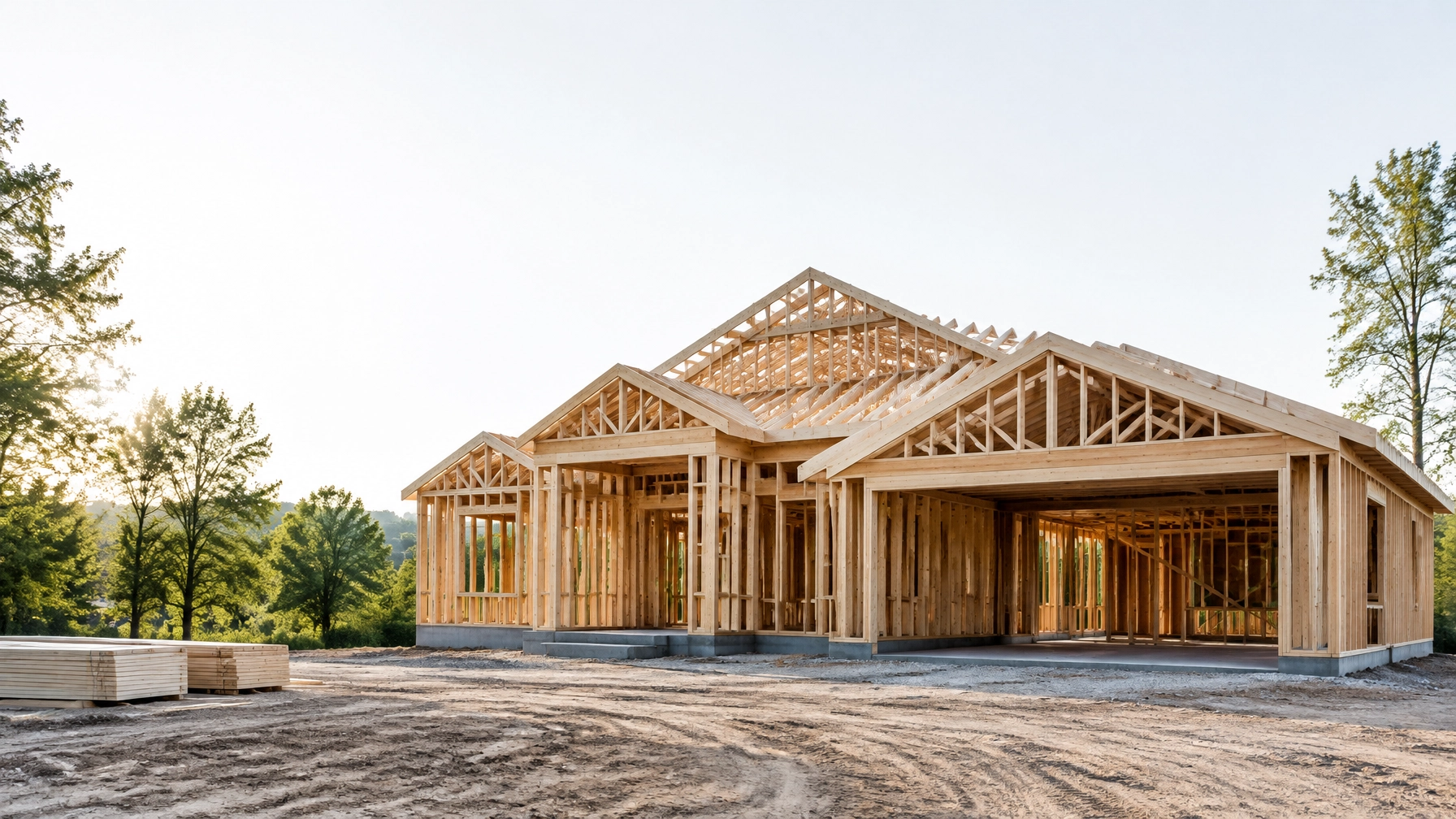

If you’re considering a ground-up build, the first challenge may not be the plans. It may be finding financing that fits the project’s timeline and moving parts. Private construction loans can offer another route when a bank’s requirements or process don’t fit your deal.
One important clarification behind the headline: the reported 73% increase refers to year-to-date ground-up construction activity on the Lightning Docs private-lending platform, not all U.S. construction lending or bank lending. The report also notes that a low comparison base in early 2025 contributed to the increase. Read the September 2026 report.
That growth is a reason to understand your options, not a guarantee that any particular project will qualify. This guide walks you through the main pieces of a private construction loan, from your land position to the final draw, so you can prepare a stronger, more workable plan.
Why builders consider private construction loans
Banks remain part of the construction-financing market, but they may not be the right fit for every investor, property, or timeline. Private lenders offer another potential source of capital for projects that need a financing structure tailored to investment real estate.
A construction loan is typically funded in stages as work progresses, rather than disbursed all at once. That means you and your lender need a shared understanding of:
- The land or lot and its place in the project budget
- The construction scope, schedule, and cost estimates
- How much contingency is available for unexpected expenses
- Which milestones qualify for draws
- What documentation and inspections are required
- How you plan to repay the loan, such as through a sale or refinance
Private financing is not a shortcut around project preparation. A clear budget, realistic timeline, capable contractor, and credible exit strategy still matter. With the right approach, though, financing can become a tool that supports the project rather than a last-minute scramble.
Takeaway: Before comparing lenders, organize the project’s numbers, documents, and timeline. A well-prepared file makes it easier to evaluate whether the financing structure is a fit.
Step 1: Clarify your land position and total project cost

Start with the land. Are you buying the lot as part of the transaction, or do you already own it? If you own it, ask the lender how it will evaluate your land position and whether any recognized value can count toward your contribution. Don’t assume the appraised value equals cash available for construction, or that every lender calculates land equity the same way.
Next, build a complete sources-and-uses budget. Depending on the project, your cost plan may include:
- Land acquisition or site preparation
- Plans, engineering, permits, and related professional services
- Construction materials and labor
- Utility work and site improvements
- Insurance and other project expenses
- Financing costs, including any interest reserve
- A separate contingency for overruns or scope changes
The goal is not just to show what you expect to spend. You need to understand how the project will be paid for at each stage, including costs that come due before a later draw is approved.
Takeaway: Ask the lender how it treats land equity and which expenses are eligible under the program. Confirm those assumptions before relying on them in your financing plan.
Step 2: Create a build budget with room for uncertainty
A construction budget should be specific enough to track progress and spot trouble early. Break major work into clear categories (such as site work, foundation, framing, mechanical systems, and finishes) and connect those categories to contractor estimates or other supporting documents.
Keep contingency visible rather than folding it into unrelated line items. Unexpected site conditions, material changes, and delayed work can affect costs. A contingency is a plan for uncertainty, not a substitute for a complete scope.
Ask your lender how contingency is handled. For example:
- Is it included in the loan commitment or funded separately?
- What documentation is needed to use it?
- Does a change order require approval before work begins?
- What happens if remaining loan proceeds and reserves are not enough to cover the remaining work?
A regularly updated cost-to-complete estimate helps you answer the most important question: Do your remaining funds still cover the work left to do?
Takeaway: Revisit the budget when scope, pricing, or schedule changes. If the numbers no longer balance, discuss the gap with your lender before it disrupts the project.
Step 3: Tie draws to completed milestones

A draw schedule sets out how you request funds as the build advances. The exact schedule and approval conditions vary by program and loan documents. In general, draws may correspond to completed stages such as site work and foundation, framing, mechanical rough-ins, interior finishes, and final completion.
Think of each draw as a documented request, not an automatic payment on a calendar date. Your lender may require some combination of:
- A draw request and updated budget
- Invoices, contractor statements, or other cost records
- A site inspection to verify completed work
- Lien waivers or title updates, where required
- Evidence that the project remains within budget and on schedule
An inspection verifies progress for the lender’s funding process. It is not a warranty of workmanship or a substitute for your own construction oversight, code inspections, or professional advice.
You can reduce avoidable delays by keeping project records current, making the site accessible for inspection, and taking photos of work that will soon be concealed. If you use stored materials, ask in advance what proof the lender requires.
Takeaway: Get the draw requirements in writing before closing. Then prepare each request against those requirements and submit complete documentation.
Step 4: Plan for interest reserves and timing
An interest reserve, if included in a program, is an amount set aside to cover interest payments during construction. It can help with cash-flow planning, but it is not free money: a reserve may be part of the project’s financing and can be affected by draw timing, delays, or changes to the project.
Ask how the reserve works, what happens if it runs low, and whether you need to plan for payments or additional funds. Keep an eye on the construction schedule as well. A delayed inspection, incomplete paperwork, unresolved change order, title issue, or mismatch between the draw request and visible progress can hold up a draw.
The FDIC’s construction and land development lending guidance and the OCC’s commercial real estate lending handbook discuss lender controls such as inspections, disbursements, and construction risk management. Requirements vary, so use your loan documents and lender’s instructions as the authority for your specific project.
Takeaway: Treat timing and reserves as active parts of your budget. Don’t wait until a reserve is nearly depleted or a deadline is close to raise a concern.
Step 5: Match the financing to your project and exit
Before you commit, make sure your lender understands the property, scope, contractor, and intended exit. Are you planning to sell at completion, or hold and refinance? The answer can shape what you need to document and how you evaluate the project’s risk.
Emerald Capital Funding offers construction loans and other nationwide private-money programs. Loan amounts vary by program and may start at $50,000. Eligibility, including multifamily eligibility, depends on the specific program. For qualifying fix-and-flip projects, some programs may offer up to 90% loan-to-cost; that is not a construction-loan promise.
When you compare options, ask about draw procedures, eligible costs, inspection requirements, contingency treatment, interest reserves, and repayment expectations. Program-dependent closings commonly run in the 14–22 day range when the file, property, and borrower meet program requirements, but that range is not a guarantee. Confirm the expected timing for your own transaction.
Investors researching fix and flip financing Ohio, fix and flip financing Oklahoma, or fix and flip financing Tennessee should evaluate the property and program, not assume that state alone determines eligibility. The same is true if you’re comparing a hard money loan Florida or hard money loan Pennsylvania. Terms depend on the specific program and transaction.
Takeaway: Compare the full process and project fit, not just the headline financing amount. Make sure the exit strategy is realistic before moving forward.
Common questions about private construction loans
Q: Is the 73% increase a measure of all construction lending in the U.S.?
A: No. The cited figure describes year-to-date ground-up construction activity in the Lightning Docs private-lending platform dataset. It is not a measure of all U.S. construction lending or bank originations.
Q: Do private construction loans fund the entire project at closing?
A: Often, construction proceeds are released through draws as work progresses, subject to the loan documents, inspections, and required records. Confirm the specific process before closing.
Q: What can delay a draw?
A: Incomplete paperwork, an inspection issue, work that does not match the requested milestone, unresolved change orders, or other lender-required conditions can slow a request. Ask for the draw checklist early and submit complete materials.
Q: Are construction loan amounts and terms the same for every borrower?
A: No. Loan amounts, terms, property eligibility, and other criteria vary by program and transaction. Review the applicable program details with the lender.
Build the financing plan before construction begins
Ground-up construction involves many connected decisions: how your land is treated, whether your budget covers the full scope, when draws can be requested, and how you’ll manage timing and repayment. You don’t have to solve every detail alone. With the right approach, and clear conversations with your lender, success within reach can become a practical path toward achieving your investment goals.
To discuss a potential project, contact Emerald Capital Funding or start an application. The team can help you explore available options; eligibility and terms depend on the specific program and transaction.