From Bridge to BRRRR: The Exact Strategy for Rapid Portfolio Scaling

If you’re considering how to transform a single investment property into a massive real estate empire, you have likely heard of the BRRRR method. It is the gold standard for investors who want to scale quickly without needing a bottomless pit of personal cash. However, the "secret sauce" that many gurus leave out is exactly how to finance it to ensure the cycle never breaks.

Welcome to the world of high-velocity real estate investing. At Emerald Capital Funding, we specialize in the two financial pillars that make this strategy possible: bridge loans and DSCR loans. This guide will equip you with a step-by-step blueprint to navigate the Bridge-to-BRRRR pipeline, helping you achieve your financial goals with the confidence of a seasoned pro.

What is the BRRRR Strategy?

Before we dive into the mechanics of the money, let’s refresh the framework. BRRRR stands for Buy, Rehab, Rent, Refinance, Repeat.

The goal is simple: buy a property that needs work, renovate it to increase its value (forced appreciation), rent it out to cover the mortgage, and then perform a cash-out refinance to pull your initial capital back out. Once you have your cash back, you move on to the next deal.

The beauty of this method is that it allows you to recycle the same pool of capital over and over again. But to make it work, you need the right leverage at the right time.

House keys and real estate data on a desk representing a BRRRR bridge loan strategy.


Step 1: Buy – Winning the Deal with Bridge Loans

The first "B" is often where investors get stuck. If you try to use a conventional bank loan to buy a distressed property, you’ll likely be rejected. Traditional banks want "move-in ready" homes. This is where bridge loans (short-term financing used to "bridge" the gap until long-term debt is secured) become your greatest asset.

When you use a bridge loan from a lender like Emerald Capital Funding, you aren't just getting a mortgage; you’re getting speed and flexibility. Bridge loans are often based on the After-Repair Value (ARV) or the Loan-to-Cost (LTC) ratio rather than just the current purchase price.

  • Speed is your weapon: In a competitive market, being able to close in 10-14 days with a bridge loan allows you to beat out buyers waiting on 45-day conventional approvals.
  • Leverage your capital: We often provide up to 90% of the purchase price and 100% of the renovation costs. This keeps your "skin in the game" to a minimum.

Actionable Takeaway: Before you make an offer, get pre-approved for a bridge loan. Knowing your numbers: specifically your LTC: will help you move faster than the competition. Check out our Bridge Loans Simplified page to see how we structure these.


Step 2: Rehab – Creating "Forced Appreciation"

The "Rehab" phase is where the magic happens. Your goal isn't just to make the house pretty; it’s to increase the property’s value strategically so that the new appraisal comes in significantly higher than your total investment.

Expert investors follow the 70% Rule: Your total investment (purchase price + rehab costs) should not exceed 70% of the estimated After-Repair Value.

  • Focus on High-ROI Upgrades: Prioritize kitchens, bathrooms, and "curb appeal" (paint, landscaping).
  • Stay on Budget: Every dollar you overspend on the rehab is a dollar you might not get back during the refinance stage.

Actionable Takeaway: Maintain a detailed "draw schedule" for your rehab. Because bridge lenders release renovation funds in stages (draws), having a clear plan ensures the project never stalls due to a lack of cash flow. For more tips on this, read our Fix and Flip Secrets Revealed.


Step 3: Rent – Stabilizing the Asset

Once the renovation is complete, you need to "Rent" the property. This step is crucial because it turns your "fix and flip" project into a "buy and hold" asset.

Most long-term lenders: especially those offering DSCR loans: require the property to be "stabilized." This means having a signed lease and, often, the first month's rent and security deposit collected.

  • Screen for Quality: A bad tenant can ruin your refinance. Lenders want to see stable, reliable income.
  • Aim for the 1% Rule: Ideally, your monthly rent should be at least 1% of the total purchase and rehab cost to ensure strong cash flow.

Modern renovated living room interior ready for rental and a cash-out DSCR loan refinance.


Step 4: Refinance – The Cash-Out Strategy with DSCR Loans

This is the most critical pivot point in the strategy. Once the property is rehabbed and rented, you need to move out of that high-interest bridge loan and into a long-term, low-interest mortgage.

We recommend using a DSCR Loan (Debt Service Coverage Ratio). Unlike traditional mortgages that look at your personal income and tax returns, a DSCR loan focuses entirely on the property’s ability to pay for itself.

  • No Tax Returns Required: If the rental income covers the mortgage payment (a ratio of 1.0 or higher), you’re in the clear.
  • Cash-Out Refinance: Because the property is now worth more than when you bought it, you can refinance based on the new appraised value. This allows you to pay off the bridge loan and "pull out" the initial cash you used for the down payment.

With the right timing, you can achieve a "perfect BRRRR," where you have $0 of your own money left in the deal, yet you own a cash-flowing asset with 20-25% equity.

Actionable Takeaway: Start the conversation with your long-term lender during the rehab phase. Understanding the 90-day BRRRR timeline is essential to avoid paying extra interest on your bridge loan longer than necessary.


Step 5: Repeat – Scaling Your Portfolio

With your initial capital back in your bank account and a tenant paying down your new DSCR mortgage, you are ready to Repeat.

This is how investors go from owning one property to owning ten or twenty in just a few years. By recycling the same $50,000 or $100,000, you aren't limited by your personal savings rate: you’re only limited by your ability to find good deals.

Row of house models increasing in size symbolizing rapid real estate portfolio scaling.


Why Every Serious Investor Needs a DSCR Loan in Their Toolbox

Scaling a portfolio requires moving away from the "W-2 mindset." Conventional lenders have limits on how many mortgages you can have (usually 10). DSCR loans, however, allow for unlimited scaling. As long as the properties make sense financially, Emerald Capital Funding can keep funding your growth.

Whether you are looking at single-family homes or making the jump to 5+ unit multi-family properties, having a lender who understands the BRRRR cycle is your competitive advantage.


Q&A: Common Questions About the Bridge-to-BRRRR Strategy

Q: How long do I have to wait to refinance a bridge loan into a DSCR loan?
A: This is known as the "seasoning period." While some conventional banks require 6-12 months, many DSCR lenders can refinance you as soon as the property is renovated and a tenant is in place. In some cases, there is no seasoning requirement at all if you aren't doing a "cash-out" above your total cost.

Q: What is a "good" DSCR ratio?
A: Most lenders look for a 1.2x ratio (meaning the rent is 20% higher than the debt payment), but we have programs that go down to 1.0x or even "no ratio" for certain high-equity deals.

Q: Can I use this strategy for multi-family properties?
A: Absolutely. In fact, scaling is often faster with multi-family units, though the financing rules change slightly once you cross into the 5+ unit territory.

Q: What happens if the appraisal comes in low?
A: This is a risk in any BRRRR. To mitigate this, we always suggest being conservative with your initial ARV estimates. If the appraisal is low, you may have to leave some "forced equity" in the deal rather than pulling all your cash out.

Real estate investor using a smartphone to manage a scaled portfolio and financial growth.


Your Pathway to Financial Security

Scaling a real estate portfolio doesn't have to be a slow, decades-long crawl. By leveraging the Bridge-to-BRRRR strategy, you can accelerate your growth and build a legacy of passive income.

At Emerald Capital Funding, we provide the financial tools: from high-leverage bridge loans to long-term DSCR solutions: to make your vision a reality. Success is within your reach, and we’ve got you covered every step of the way.

Ready to start your next deal?
Apply Now to get a quote, or Contact Us to speak with a lending expert about your strategy. Let’s build your empire together.


Conventional Loan Rehab is Too Slow: Why Pro Investors are Using Hard Money to Win in 2026

If you’re considering scaling your real estate portfolio this year, welcome to the world of high-speed investing. In 2026, the market isn't just about who has the best eye for a property; it’s about who can get to the closing table first. Whether you are a seasoned pro or just starting your journey, the way you finance your acquisitions will determine whether you’re collecting keys or just collecting "better luck next time" emails.

For years, the conventional loan rehab was the go-to for many. Programs like Fannie Mae HomeStyle or FHA 203(k) offered low interest rates and a path to renovation. However, in today's competitive landscape, these "slow and steady" options are often the very thing standing between you and a profitable deal. At Emerald Capital Funding, we’ve seen a massive shift toward hard money loans, and for good reason.

This guide will equip you with the knowledge to understand why traditional financing is lagging and how you can leverage speed to dominate your local market.

The Conventional Loan Rehab Bottleneck: Why "Cheap" Money Costs You More

Before we dive into the solutions, we need to address the elephant in the room: the conventional lending process is fundamentally broken for the modern investor. When you use a conventional rehab loan, you aren't just borrowing money; you are entering into a long-term relationship with a bureaucratic machine.

The Inspection and Approval Marathon

Conventional rehab loans require an exhaustive series of hurdles. You need pre-approvals, detailed property inspections, multiple contractor bids, and intensive underwriting. If you are looking at a distressed property, the kind that offers the best margins, a conventional lender might reject the deal outright because the home isn't "habitable" in its current state.

The Rehab Draw Nightmare

Once you actually close (which can take 45 to 60 days), the trouble doesn't stop. Research indicates that rehab draw inspections are a major pain point. Conventional lenders often have rigid milestones. If there is a slight mismatch between your project scope and your progress, or if your documentation is missing a single receipt, the lender can freeze your funds. This triggers secondary reviews and halts your construction, costing you thousands in holding costs.

The Competition Gap

In 2026, sellers want certainty. If a seller receives two offers, one with a conventional rehab contingency that takes two months to close and one with a hard money loan that can close in seven days, the faster offer wins every time, even if it’s for a slightly lower price.

House keys and smartphone on a desk showing the speed of hard money loans over slow conventional rehab paperwork.

Hard Money Loans: The Pro Investor’s Secret Weapon

With that said, why are professional investors increasingly turning away from banks and toward private capital? The answer lies in the fundamental difference in how these loans are structured. Hard money loans are asset-based. This means the lender cares more about the value of the property and the potential of the project than your personal debt-to-income ratio.

1. Lightning-Fast Closing Times

In the time it takes a conventional lender to schedule an appraisal, a hard money lender like Emerald Capital Funding can have your deal funded. We’re talking days, not months. This speed allows you to:

  • Snag off-market deals before they hit the MLS.
  • Compete with "all-cash" buyers.
  • Secure properties at a discount because you can solve the seller's problem quickly.

2. Focus on "As-Completed" Value (ARV)

Conventional lenders typically lend based on the current value of the home. Hard money lenders look at the After Repair Value (ARV). This allows you to borrow a higher percentage of the total project cost, including the renovation budget. If you want to dive deeper into the math, check out our guide on fix and flip secrets and LTC math.

3. Flexibility with "Ugly" Houses

If a house is missing a kitchen or has a hole in the roof, a conventional lender will run for the hills. A hard money lender sees opportunity. We understand that the "ugly" houses are where the profit is made. We provide the capital to fix those issues so you can create value where others see a liability.

Actionable Takeaway: If you find a deal that requires significant structural work, don't even waste your time with a conventional bank. Start your hard money application immediately to secure the property before someone else does.

A Side-by-Side Comparison: Speed and Documentation

To help you visualize the difference, let's look at how these two paths typically play out for a standard $300,000 fix-and-flip project.

Feature Conventional Rehab Loan Hard Money Loan (Emerald Capital)
Time to Close 45–60+ Days 7–10 Days
Credit Focus Strict (DTI, Tax Returns) Asset-based (The Deal)
Property Condition Must be mostly habitable Can be a total gut-job
Renovation Funds Released slowly with heavy red tape Flexible draw schedules
Competitive Edge Low (Sellers hate the wait) High (As good as cash)

As you can see, while the interest rate on a hard money loan might be higher than a conventional mortgage, the "cost of capital" is often lower when you factor in the deals you actually win and the speed at which you can turn over your capital.

Split view of a home renovation transformation funded by a fast fix and flip hard money loan.

The Strategy: The "Buy Fast, Refi Later" Method

Many investors worry about the higher interest rates of hard money. But pro investors don't keep hard money loans for 30 years, they use them as a bridge. This is often referred to as the BRRRR method (Buy, Rehab, Rent, Refinance, Repeat).

Here is how you can use this strategy to achieve financial security:

  1. Buy: Use a bridge loan or hard money to buy a distressed property quickly.
  2. Rehab: Use the lender’s renovation funds to fix the property and increase its value.
  3. Rent: Place a tenant to generate cash flow.
  4. Refinance: Now that the property is beautiful and habitable, move it out of the expensive hard money loan and into a long-term DSCR loan.
  5. Repeat: Take your initial capital out and do it all over again.

Because you’ve already completed the rehab, the refinance into a long-term loan is much smoother. You won't have to deal with the "rehab draw" headaches of a conventional loan because the work is already done. You can learn more about why every serious investor needs this in their toolbox by reading about DSCR loans explained.

Common Questions About Hard Money vs. Conventional Rehab

Q: Isn’t hard money too expensive for a first-time investor?
A: Actually, for a first-timer, hard money can be safer. A hard money lender acts as your partner; if we won't fund the deal, it’s probably because the math doesn't work. This "second set of eyes" can save you from a bad investment.

Q: Do I still need a down payment?
A: Yes, most hard money loans require some "skin in the game," typically 10-20% of the purchase price. However, we often fund 100% of the renovation costs.

Q: Can I use hard money for my primary residence?
A: Generally, no. Hard money is designed for business purposes and investment properties. If you’re looking to live in the home, conventional rehab loans are your best bet. But if you’re looking to make a profit, hard money is the way to go.

Professional handshake in a modern office symbolizing a successful partnership with a hard money lender.

Success is Within Your Reach with the Right Partner

Transitioning from conventional thinking to a "pro investor" mindset is a major milestone on your pathway to financial security. You don't have to let slow-moving banks dictate the pace of your growth. By choosing speed and flexibility, you position yourself to win more bids and complete more projects every year.

At Emerald Capital Funding, we specialize in providing the speed you need to compete in 2026. Whether you are looking for a fix and flip loan or a long-term DSCR solution, we’ve got you covered.

Ready to stop waiting and start winning?

Don't let the next great deal slip through your fingers while you wait for a bank to call you back. Contact us today or apply now to get your project funded in record time. Your next successful deal is just a click away.

The “5-Unit Jump”: How to Finally Scale from Residential to Commercial Multi-Family

If you’re considering taking your real estate portfolio to the next level, you’ve likely hit the "residential ceiling." You have a few single-family rentals, maybe a duplex or a fourplex, and you’re starting to realize that managing ten different roofs and ten different insurance policies is a lot of work for the return.

Welcome to the world of commercial real estate. In the industry, we call this the "5-unit jump." It’s the moment an investor moves from residential lending (1-4 units) into the realm of multi family 5 units or more. It’s a significant milestone, and honestly, it’s where the real wealth-building happens.

At Emerald Capital Funding, we see investors struggle with this transition all the time, not because they aren't ready, but because traditional banks make the process feel like pulling teeth. This guide will equip you with the knowledge to hop over that "financing wall" and scale your portfolio with confidence.

Why the Number 5 Changes Everything

In the eyes of the law and the bank, a 4-unit building is just a big house. A 5-unit building? That’s a business.

When you buy a residential property (1-4 units), the lender looks primarily at you. They want your tax returns, your W2s, your debt-to-income ratio (DTI), and a credit score that’s sparkling clean. They use "comparables" (comps) to figure out what the building is worth. If the house next door sold for $400k, your house is worth $400k.

Once you step into commercial loans for properties with multi family 5 units or more, the game changes. The lender starts looking at the property more than the person. This is a massive advantage for self-employed investors or those with a lot of tax write-offs.

Key Takeaway: The value of a 5+ unit building is based on the income it generates, not just what the building down the street sold for. This gives you, the investor, much more control over your equity.

Modern multi family 5 units or more apartment building illustrating commercial real estate scaling.

Scaling Beyond the "Underwriting Wall"

The biggest challenge investors face when making the jump is what we call the "underwriting wall." You’ve spent years perfecting the art of looking at Zillow comps. Now, you have to learn a new language. To successfully secure commercial loans, you need to get comfortable with:

  1. T-12 (Trailing 12 Months): This is a financial statement showing the property’s actual income and expenses over the last year. No more "guessing" what the utilities will cost; the numbers are right there.
  2. Cap Rates (Capitalization Rates): This is the rate of return on a real estate investment property based on the income that the property is expected to generate.
  3. Pro-Formas: This is the "what if" document. It shows what the property could do if you managed it better, raised rents, or cut expenses.
  4. Net Operating Income (NOI): This is the holy grail of commercial lending. Revenue minus operating expenses.

Before we dive into the financing side, you need to realize that in the 5+ unit space, you can "force appreciation." In a residential house, you can’t make it worth $100k more just by raising the rent. In a 5-unit building, increasing the NOI by just a few thousand dollars a year can add six figures to the building’s valuation.

Why Traditional Banks are a Headache (and How Emerald Skips the Red Tape)

If you go to a big-box bank for a 5-unit deal, be prepared for a long, slow slog. They often treat commercial deals with the same rigid guidelines as residential ones, requiring massive amounts of personal paperwork and taking 60 to 90 days to close. By the time they’re done "reviewing" your 2024 tax returns, the deal is gone.

At Emerald Capital Funding, we do things differently. We specialize in skipping the bank red tape. Because we focus on the asset’s performance, we can offer flexible commercial lending that moves at the speed of the market.

  • Speed: We know that in 2026, the best deals don't wait for a committee meeting.
  • Flexibility: We look at the DSCR (Debt Service Coverage Ratio) to ensure the property pays for itself. If the math works, the deal works.
  • No Personal Income Stress: If your tax returns show a loss because of smart depreciation, a traditional bank might say no. We say, "Show us the property’s income."

Professional closing of a commercial loan with a key handoff in a modern business office.

Strategies for a Successful Jump

Don't worry, you don't need to be a billionaire to enter the commercial space. Here is how our most successful clients are making the jump right now:

1. Leverage Your Existing Equity

Many investors have a "lazy" equity sitting in their 1-4 unit properties. By doing a cash-out refinance on your residential portfolio, you can pull the down payment needed for a multi family 5 units or more acquisition.

2. The Bridge-to-Stabilization Play

If you find a 6-unit building that’s a bit run down and under-rented, a traditional bank won't touch it. You can use one of our bridge loans to buy the property and fix it up. Once the rents are raised and the building is "stabilized," we can move you into a long-term commercial loan.

3. Professional Management

Once you hit 5 units, it’s often time to stop being the guy who fixes the toilets at 2:00 AM. Commercial properties have higher margins that allow you to bake in the cost of professional property management. This is the pathway to true passive income and financial security.

Common Questions About 5+ Unit Financing (Q&A)

Q: Do I need a different type of insurance for 5+ units?
A: Yes. You move from a standard homeowner/landlord policy to a commercial property policy. The good news? In 2026, many newer multifamily buildings are seeing better insurance rates than older single-family clusters.

Q: Is the down payment higher for commercial loans?
A: Generally, yes. While you might get a residential loan with 3-5% down if you live there, commercial deals typically require 20-25% down. However, the ability to scale 20 units at once instead of buying 20 separate houses makes this much more efficient.

Q: Can I use a DSCR loan for a 5-unit building?
A: Absolutely. In fact, DSCR loans are one of the most popular tools for the 5-unit jump because they focus on the property's cash flow rather than your personal salary.

Q: Do I need a special LLC for commercial property?
A: It’s highly recommended. Most commercial lenders will actually require you to close in the name of an entity (LLC or Corp) rather than your personal name for liability and structural reasons.

Multi-family property model and digital tablet used for commercial lending and investment planning.

The 2026 Market: Why Now?

The current real estate climate is uniquely suited for those scaling into multi family 5 units or more. With higher cap rates and some softening in rents, we are seeing a "buyer's market" for commercial assets that hasn't existed in years. Sellers are more willing to negotiate, and with the right financing partner, you can lock in deals that will cash flow for decades.

With that said, the biggest mistake you can make is waiting for the "perfect" moment. Success is within your reach if you stop thinking like a hobbyist and start thinking like a commercial owner.

Actionable Steps to Get Started

If you’re ready to stop "collecting houses" and start "building a portfolio," follow these steps:

  1. Audit Your Current Equity: See how much cash you could pull from your current rentals.
  2. Get a Pro-Forma: Find a 5-10 unit property online and ask the broker for the T-12 and the Pro-Forma. Practice reading them.
  3. Check the Math: Use our guides on fix and flip secrets or DSCR math to see if the numbers hold water.
  4. Call a Partner: Don't go to a bank that doesn't understand your vision. Reach out to a lender that specializes in the 5-unit jump.

Ready to Scale?

Making the jump to commercial real estate is the fastest way to achieve your financial goals. You get more units under one roof, streamlined management, and financing that rewards the quality of your deal rather than the size of your W2.

At Emerald Capital Funding, we’ve got you covered. Whether you’re looking for a bridge loan to snatch up a value-add deal or a long-term commercial loan to stabilize your retirement, we’re here to help you skip the red tape.

Ready to see what you qualify for? Apply now or contact us today to discuss your next multi-family deal. Let’s get that 5-unit jump started!

The DSCR ‘Cheat Code’: Everything you need to scale your rental empire in 2026 without showing a single tax return

If you’re considering scaling your real estate portfolio in 2026, you’ve probably already hit the "Big Bank Wall." You know the one, where you walk into a traditional lender with a killer deal, and they spend the next three months digging through your 2024 tax returns, questioning a $200 deduction from three years ago, and eventually telling you that your debt-to-income (DTI) ratio is too high to buy another property.

Welcome to the world of modern real estate investing, where the old rules of "work hard, show your W-2, and hope for a loan" are officially dead.

If you want to play the game at a high level, you need to know about the DSCR loans "cheat code." At Emerald Capital Funding, we see investors using this tool to bypass the red tape and close deals while their competition is still waiting for a callback from the local branch manager. This guide will equip you with everything you need to know to leverage this strategy and achieve your financial goals without the paperwork headache.

What Exactly Is a DSCR Loan? (The "Secret Sauce" Explained)

Before we dive into the strategy, let’s demystify the terminology. DSCR stands for Debt Service Coverage Ratio.

In the world of traditional lending, the bank looks at you, your salary, your credit cards, your car note, and your tax returns. In the world of DSCR loans, the lender looks at the property.

Basically, we want to know one thing: Does the rent cover the mortgage?

If the property generates enough income to pay its own debt, why should the lender care how much you made at your day job last year? This shift in perspective is what allows serious investors to scale from two properties to twenty without getting slowed down by personal income limits.

The Basic Math:
The formula is simpler than you think:
DSCR = Net Operating Income (NOI) / Annual Debt Service

For example, if a property brings in $2,000 a month in rent and the mortgage (including taxes, insurance, and HOA) is $1,600, your ratio is 1.25. In the eyes of a lender like Emerald Capital Funding, that’s a property that pays for itself and then some.

House keys on a financial ledger with a calculator representing DSCR loan calculations and rental property income.

Why Traditional Banks are Scaling Killers

Once you’ve acquired three or four rental properties using traditional financing, you usually hit a ceiling. Traditional banks have strict caps on the number of loans you can have and how much total debt you can carry relative to your personal income.

Here is why the "old way" fails the modern investor:

  • The Tax Return Trap: Real estate investors are smart, they use legal deductions and depreciation to lower their taxable income. The problem? Traditional banks use that lower "taxable" income to decide if you can afford a loan. It’s a Catch-22.
  • The Speed Issue: A traditional mortgage can take 45 to 60 days to close. In a competitive market like we’re seeing in 2026, a 60-day close is a deal-killer.
  • The DTI Ceiling: Even if you’re a millionaire, if your personal debt-to-income ratio crosses a certain threshold (usually around 43-50%), the bank says "no more."

With DSCR loans, these hurdles virtually disappear. We aren't looking at your tax returns, and we aren't calculating your DTI. We are looking at the asset. This is why we call it a cheat code, it allows you to keep buying as long as the deals make sense.

What You Need to Qualify in 2026

While DSCR loans are much more flexible than traditional loans, they aren't "no-doc" loans in the sense that anyone with a pulse can get one. You still need to bring a solid deal to the table. Here is what we’re looking for at Emerald Capital Funding right now:

  1. The Magic Number (1.20 – 1.25): Most lenders want to see a DSCR of at least 1.20. This means the property makes 20% more than the mortgage payment. Some programs allow for a 1.0 ratio (breaking even), but you’ll usually pay a bit more in interest for that flexibility.
  2. Credit Score: You don't need a perfect 850, but you should aim for 660 or higher. The better your score, the lower your rate and the higher your LTV (Loan-to-Value).
  3. The Down Payment: Expect to put down 20% to 25%. Since the lender is taking on more risk by not looking at your personal income, they want to make sure you have "skin in the game."
  4. Cash Reserves: Lenders usually want to see that you have 3 to 6 months of mortgage payments tucked away in a bank account just in case a tenant moves out.

Actionable Takeaway: Before you apply, run the numbers on your target property. If the rent doesn't at least cover the mortgage, the DSCR strategy won't work. Check out our services page to see how we structure these deals.

Investor holding keys to a modern multi-family building funded by a DSCR rental property loan.

Scaling Your Empire: The Step-by-Step Blueprint

So, how do you actually use this to build a "rental empire"? It’s all about the velocity of money.

  • Step 1: Find an Under-Market Property. Look for properties where the current rent is low but the potential is high.
  • Step 2: Use Short-Term Capital if Needed. If the property needs work, you might start with a bridge loan to get it fixed up and tenanted.
  • Step 3: The DSCR Refinance. Once the property is rented out at market rates, you use a DSCR loan to pull your initial capital back out.
  • Step 4: Repeat. Because the DSCR loan doesn't impact your DTI, you can take that capital and move immediately to the next deal.

With the right approach, you aren't limited by your salary; you’re only limited by your ability to find good deals. This is how "pro" investors stay ahead of the curve. If you're ready to start, you can apply now to see what your numbers look like.

The 2026 Advantage: Speed and Certainty

In today's market, sellers are looking for two things: a high price and a guaranteed closing. When you show up with a DSCR lender behind you, you’re basically a cash buyer in their eyes. We don't have to wait for a "verification of employment" or a transcript from the IRS.

We’ve seen investors win bids against higher offers simply because they could guarantee a 21-day close, while the other guy was stuck in the "big bank" underwriting cycle. Speed is a competitive weapon.

Two professionals shaking hands in a modern office after a fast closing on a DSCR investment loan.

Frequently Asked Questions (Q&A)

Q: Can I get a DSCR loan for my primary residence?
A: No. DSCR loans are strictly for investment properties. If you plan to live in it, the government requires different types of documentation.

Q: Do I need to have a property management company?
A: Not necessarily, but it helps. Some lenders will give you better terms if you have professional management, while others are fine with you managing it yourself as long as the numbers work.

Q: What happens if the property is vacant?
A: Lenders will use "market rent" (estimated by an appraiser) to calculate the DSCR if the property is currently vacant. This is great for "fix and rent" strategies.

Q: Are interest rates higher on DSCR loans?
A: Yes, typically 0.75% to 1.5% higher than a standard conventional loan. But remember: you're paying for the ability to scale. The "cost" of the slightly higher rate is usually much lower than the "opportunity cost" of not being able to buy the property at all.

Q: Can I close in an LLC?
A: Absolutely. In fact, most of our clients prefer to close in an LLC for asset protection. Unlike conventional loans, DSCR lenders actually encourage this.

A scaling portfolio of rental apartment buildings representing growth through DSCR real estate financing.

Ready to Level Up?

Scaling a rental portfolio in 2026 doesn't have to be a nightmare of paperwork and "no's" from conservative banks. By focusing on the property's performance rather than your personal tax returns, you unlock a level of growth that most people think is impossible.

At Emerald Capital Funding, we specialize in helping investors navigate these "cheat codes" to build real wealth. Whether you're looking at your first rental or your fiftieth, we've got you covered.

Your Path to Success:

  1. Analyze your next deal based on its cash flow (Rent / Mortgage).
  2. Ensure your credit is in the "green zone" (660+).
  3. Contact us or jump straight to the application to get a term sheet.

Don't let a tax return hold your empire back. The path to financial security is through the assets, not the paperwork. Let’s get to work!

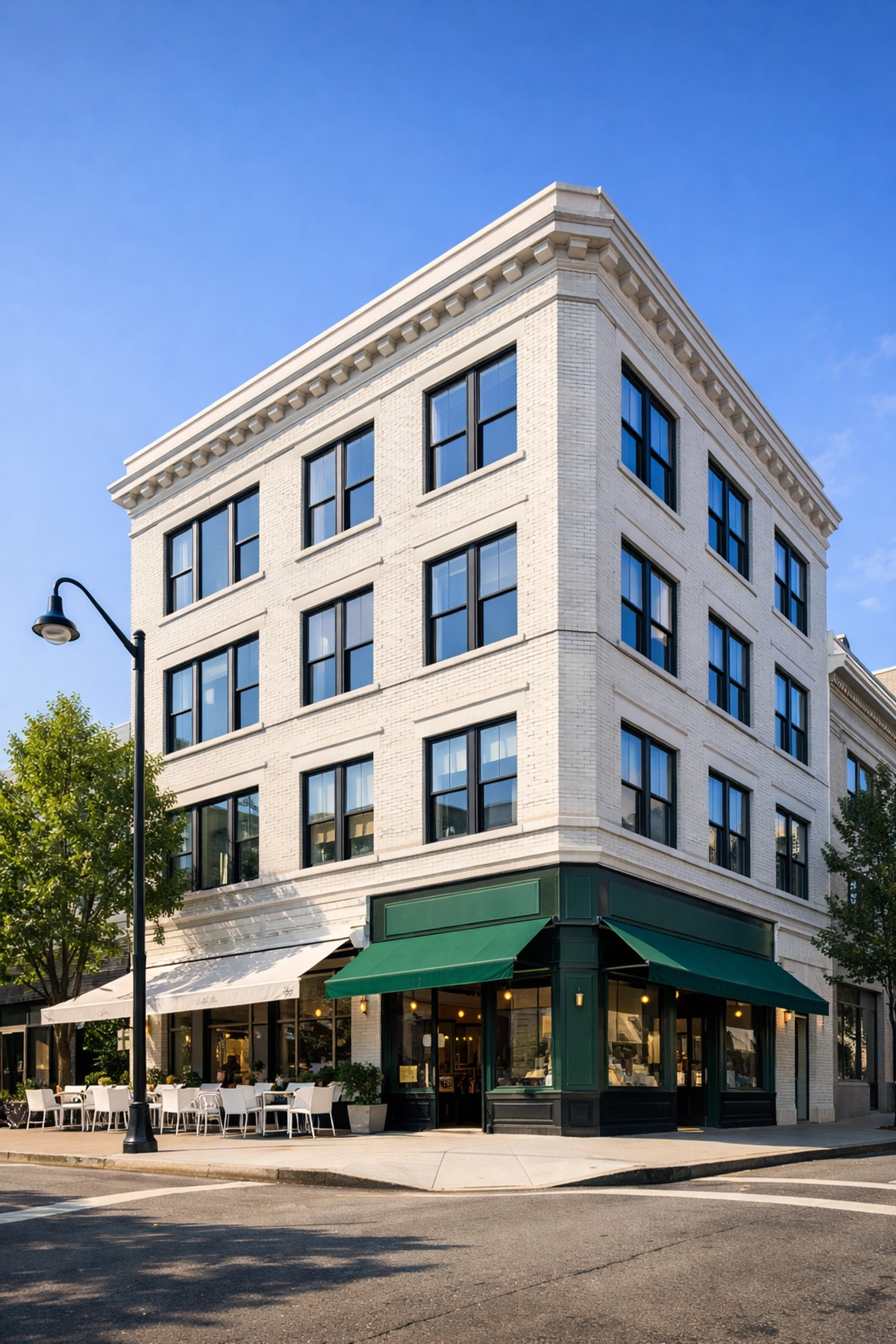
Real Deal Highlight: Storefronts, Houses, and Restaurants – Financing the Mixed-Use Dream

Welcome to the world of "Frankenstein" properties, those unique, multi-faceted buildings that make traditional bank underwriters break out in a cold sweat. If you’re considering stepping into the mixed-use arena, you already know that these deals aren’t your average "cookie-cutter" residential flips. They require a bit more grit, a lot more vision, and a lending partner who isn't afraid of a little complexity.

At Emerald Capital Funding, we thrive on the complex. We recently closed a deal that perfectly illustrates why mixed-use properties are the ultimate "dream" for investors looking to diversify their portfolios and maximize cash flow. We’re talking about a project in Buffalo that involved a six-unit building and a massive mixed-use property featuring eight storefronts, a restaurant, and even a single-family home.

This guide will equip you with the knowledge of how we handle these "Real Deal" highlights and how you can leverage our flexible lending solutions to scale your own real estate empire.

What Is a Mixed-Use Dream?

Before we dive into the nitty-gritty of the Buffalo deal, let’s define what we mean by mixed-use. In the lending world, a mixed-use property is any building that combines residential and commercial space. Think of a classic Main Street building: a retail shop or a restaurant on the ground floor with apartments upstairs.

However, the deal Sonny brought to the table was a bit more involved. This wasn't just a "mom and pop" shop with a studio overhead. This was a strategic acquisition in Buffalo that included:

  • A dedicated six-unit residential building.
  • A sprawling property featuring eight separate storefronts.
  • An operational restaurant.
  • A single-family home located on the same parcel.

When you have that many moving parts, most lenders start looking for the exit. They see "restaurant" and think "high risk." They see "storefronts" and worry about vacancy rates. But at Emerald Capital Funding, we see something else: multiple streams of income.

Financing the Mixed-Use Dream

The Buffalo Breakdown: Why This Deal Worked

The beauty of the Buffalo project was the sheer diversity of the assets. If the restaurant has a slow month, the six apartments are still paying rent. If one storefront goes dark, the single-family home and the other seven shops keep the engine running.

This is what we call "built-in diversification." However, getting a loan for this requires a systematic, step-by-step approach. Here is how we looked at it:

1. The Power of the DSCR Loan

For a deal like this, we often look toward DSCR (Debt Service Coverage Ratio) loans. This is a game-changer for investors who are tired of jumping through bank hoops. Instead of looking at your personal tax returns or your W-2 from three years ago, we look at the property’s ability to pay for itself.

If the combined income from the restaurant, the storefronts, and the residential units covers the mortgage and expenses (with a little breathing room), you’re in business. We’ve got you covered with loans that focus on the asset’s performance rather than your personal debt-to-income ratio.

2. Navigating the Commercial-to-Residential Mix

Lenders usually have strict rules about the percentage of commercial space vs. residential space. For many specialized DSCR mixed-use loans, the "sweet spot" is a maximum of eight units with no more than three commercial units. But when you have eight storefronts and a restaurant, you’re moving into true commercial real estate territory.

Don't worry; this is where our versatility shines. We don't just have one "bucket" of money. Whether it’s a small mixed-use building or a massive shopping center with a house attached, we have the bridge loans and commercial products to bridge the gap.

3. Faster Closings with Asset-Based Lending

In a hot market like Buffalo, speed is everything. Traditional banks can take 60 to 90 days to close a complex mixed-use deal. By using asset-based lending, we can often cut that time in half. We focus on the property value and the revenue-generating potential, which allows us to bypass much of the red tape that slows down conventional financing.

Actionable Takeaway: If you find a property with a weird mix of units, don't walk away. Calculate the total potential income first. If the math works, the funding usually will too.

Renovated mixed-use building featuring a ground-floor restaurant, retail storefronts, and residential apartments.

Why Traditional Banks Say "No" (And Why We Say "Yes")

I’ll be honest with you: traditional banks love boring deals. They love a three-bedroom, two-bath house in a suburb where every other house is exactly the same. When you bring them a "restaurant-storefront-house" combo, their software literally doesn't know what to do with it.

Here are the three big reasons banks reject these deals:

  1. Complexity of Valuation: How do you appraise a restaurant and a single-family home on the same lot? It’s hard work, and most bank appraisers don't want to do it.
  2. Risk Aversion: Restaurants have higher turnover than residential tenants. Banks see this as a red flag; we see it as an opportunity for higher-than-average returns.
  3. Strict Underwriting: Banks are tied to federal regulations that often limit how much commercial "weight" a residential loan can carry.

At Emerald Capital Funding, we aren't bound by those same rigid constraints. We look at the "Big Picture." If you’re scaling big in places like Detroit or Buffalo, you need a lender who speaks the language of investment, not just the language of "compliance."

Financing Options for Your Mixed-Use Project

If you’re looking to replicate the success of the Buffalo deal, you need to know which tools are in your belt. Here’s a quick breakdown of what we offer:

  • Mixed-Use DSCR Loans: Best for properties where the residential component is significant. These typically offer 30-year fixed rates or hybrid ARMs (Adjustable Rate Mortgages).
  • Bridge Loans: Perfect for "rehab-to-rent" scenarios. If the storefronts need a facelift before they can be leased at market rates, a bridge loan provides the capital to get the work done quickly. Learn more about Bridge Loan basics here.
  • Commercial Real Estate Financing: For larger projects (like the 8-storefront monster), we can go up to 75% LTV (Loan to Value), providing the leverage you need to keep your cash for the next deal.

Actionable Takeaway: Before applying, make sure you have a clear "rent roll" for all units. Documentation is the key to a fast "Yes."

Visual representation of a mixed-use real estate portfolio with retail storefronts, a restaurant, and a home.

Frequently Asked Questions (Q&A)

Q: Can I get a loan if the property is more than 50% commercial?
A: Yes, but it will likely fall under a commercial loan product rather than a residential DSCR product. We handle both, so we can pivot the loan structure based on the property’s specific footprint.

Q: What is the minimum credit score for a mixed-use deal?
A: Generally, we like to see a FICO score of 660 or higher. However, because we are asset-based lenders, we have more flexibility than your local credit union might.

Q: Do I need to show my personal income tax returns?
A: For our DSCR and asset-based programs, usually no! We are looking at the property’s income, not yours. This is a pathway to financial security for many self-employed investors who have a lot of write-offs.

Q: What’s the maximum number of units you can fund?
A: For our standard mixed-use DSCR products, we usually cap it at eight units. For anything larger (like a 20-unit building with retail), we move into our commercial lending division.

Your Pathway to Financial Security Through Mixed-Use

Success within your reach often starts with seeing the potential where others see problems. The Buffalo deal wasn't "easy," but it was profitable. By combining a restaurant, storefronts, and residential units, the investor created a powerhouse of cash flow that is protected against market fluctuations in any single sector.

With the right approach, you can turn these complex properties into the cornerstone of your portfolio. Whether you are looking for DSCR loans explained or you need a custom bridge solution for a "Frankenstein" property of your own, we have the expertise to get it across the finish line.

Before you dive into your next big move, make sure you have a team that understands the nuances of mixed-use lending. We’ve seen it all: from Buffalo to Detroit and beyond: and we’re ready to help you fund the dream.

Ready to see what your mixed-use project could look like?
Apply Now with Emerald Capital Funding and let’s get those storefronts working for you. You can also Contact Us to discuss the specifics of your unique property. We don't just fund buildings; we fund your growth.

Looking For Liquidity? Here Are 10 Things You Should Know About Selling Your Auto Loan Portfolio

If you’re considering how to unlock the capital tied up in your current assets, welcome to the world of secondary market liquidity. Whether you’re a boutique lender, a buy-here-pay-here operator, or a private investor, there comes a point where holding a stack of auto loans just doesn’t make sense for your growth strategy anymore. Maybe you’re looking to pivot into real estate, or perhaps you just need more "dry powder" to fund new originations.

At Emerald Capital Funding, we understand that liquidity is the lifeblood of any financial operation. While our bread and butter is real estate lending, we’re experts in how financial assets, like auto loan portfolios, can be leveraged or sold to fuel your next big move. This guide will equip you with the knowledge you need to navigate the sale of your portfolio and ensure you’re getting the best possible value for your paper.

1. Understand the "Why" Behind the Sale

Before we dive into the "how," let’s talk about the "why." Most lenders sell their portfolios for one of three reasons:

  • Liquidity: You need cash now to reinvest in higher-yielding opportunities, like a fix and flip project.
  • Risk Management: You want to reduce your exposure to a specific geographic area or credit tier.
  • Operating Capital: You need to clear your warehouse lines to start the cycle over again.

Knowing your primary motivation helps you decide how aggressive you need to be on pricing and how fast you need the deal to close.

2. Market Research is Non-Negotiable

The market for auto paper fluctuates just like the housing market. In 2026, interest rates and consumer delinquency trends play a huge role in what buyers are willing to pay. You need to identify who is buying right now, is it credit unions, private equity firms, or specialized hedge funds? Understanding the current "appetite" for different credit tiers (Prime vs. Subprime) will help you set realistic expectations.

3. Scrub Your Data (And Then Scrub It Again)

When you sell a portfolio, you aren't just selling loans; you’re selling data. Buyers will perform deep due diligence. If your files are missing proof of insurance, GPS tracking data (for subprime), or clear titles, your valuation will take a hit.

  • Actionable Takeaway: Create a clean, digital "data room" where all contracts, credit applications, and payment histories are organized and easily accessible.

A laptop showing organized financial charts for an auto loan portfolio valuation and data review.

4. Master the Art of Portfolio Valuation

How much is your portfolio actually worth? It’s rarely just the "principal balance." Buyers look at the Weighted Average Coupon (WAC), the remaining term, and the historical loss rates. They will apply a discount rate to determine the present value of those future cash flows.

  • Pro Tip: If your portfolio has a high interest rate but low delinquency, you might even sell it at "premium" (above par), though most portfolios sell at a slight discount to account for the buyer's risk and servicing costs.

5. Segment Your Portfolio for Better Pricing

Don't just throw everything into one bucket. You might get a better overall price by "tranching" your portfolio. For example, you could sell your "A-Paper" (700+ FICO) to a credit union and your "Deep Subprime" paper to a high-yield distressed debt fund. By matching the risk profile to the right buyer, you maximize your total exit value.

6. Negotiate Recourse vs. Non-Recourse

This is a big one.

  • Recourse: If the borrower stops paying shortly after the sale, you have to buy the loan back or replace it.
  • Non-Recourse: Once the deal is done, the risk is entirely the buyer’s.
    Obviously, non-recourse deals are better for you, but they often come with a lower purchase price. We’ve got you covered if you’re unsure which way to lean, just remember that protecting your long-term liquidity usually means aiming for as little recourse as possible.

Close-up of a handshake after negotiating terms for selling an auto loan portfolio.

7. Don't Ignore Regulatory Compliance

The CFPB and state regulators don't stop watching just because you sold the debt. You must ensure that your origination process followed all Truth in Lending Act (TILA) and Fair Debt Collection Practices Act (FDCPA) guidelines. A buyer will run "compliance samples," and if they find "predatory" patterns, the deal will die on the vine.

8. Auction vs. Direct Sale: Choose Your Path

You have two main ways to go to market:

  1. Direct Sale: You find a buyer, negotiate one-on-one, and close. This is often faster and more discreet.
  2. Auction/Marketplace: You list your portfolio on a digital exchange where multiple buyers bid. This can drive the price up, but it can also be more time-consuming and public.

9. The Timeline: It’s a Marathon, Not a Sprint

Don't expect to have cash in your bank account tomorrow. A typical auto loan portfolio sale takes anywhere from 30 to 90 days.

  • Phase 1: Initial review and NDA (1 week)
  • Phase 2: Due diligence and "tape" review (2-4 weeks)
  • Phase 3: Contract negotiation and legal (2 weeks)
  • Phase 4: Funding and transfer (1 week)

Progress bar illustrating the multi-week timeline for selling an auto loan portfolio.

10. Have a Reinvestment Plan Ready

The worst thing you can do is get a massive influx of liquidity and let it sit in a low-interest savings account. Most of our successful clients use the proceeds from a portfolio sale to diversify. For instance, moving that capital into DSCR loans allows you to build a portfolio of income-producing real estate that is often more stable than auto debt.

How Emerald Capital Funding Can Help

While we specialize in real estate, we are experts in liquidity solutions. Many of our clients come to us because they have capital "trapped" in other investments. We can help you look at your overall financial picture and determine if selling your auto paper is the right move to fund your next multifamily commercial acquisition or a high-leverage fix-and-flip.

Success is within your reach when you treat your loan portfolio as a fluid asset rather than a static one. By following these steps, you’ll be well on your way to a cleaner balance sheet and more investment power.

Small house model symbolizing reinvesting liquidity from auto loans into real estate property.


Q&A: Common Questions About Selling Auto Portfolios

Q: Will my customers know I sold their loan?
A: Yes. Legally, you (or the buyer) must send a "Hello/Goodbye" letter notifying the borrower of the change in servicing and where to send their future payments.

Q: Can I sell a portfolio if some loans are in default?
A: Absolutely. There is a robust market for "Non-Performing Loans" (NPLs). However, expect to sell these at a significant discount: sometimes as low as 5 to 20 cents on the dollar, depending on the age of the debt.

Q: Do I need to keep servicing the loans after the sale?
A: You can choose to sell "servicing released" (the buyer takes over everything) or "servicing retained" (you keep collecting the payments and take a small fee). Most small-to-mid-sized sellers prefer "servicing released" to completely exit the risk.

Q: How does this help me with real estate investing?
A: Selling an auto portfolio provides a lump sum of cash that can be used as a down payment for property. For example, if you have $500k in auto paper, selling it can give you the 10% or 20% down payment needed for a 90% LTC fix-and-flip loan, allowing you to control a much larger asset.


Ready to Turn Your Paper into Property?

If you're looking for liquidity and want to see how that capital can work harder for you in the real estate market, let’s talk. At Emerald Capital Funding, we’re more than just lenders; we’re your partners in growth.

Contact Bill Nicholson at Emerald Capital Funding today!

Real Deal Highlight: Scaling Big in Detroit – 16 Units and 90% LTC

If you’re considering making a move into the multifamily space, you’ve probably heard a lot of noise about where the "smart money" is going. Welcome to the world of high-leverage commercial investing, where we stop looking at single-family houses and start looking at entire city blocks. I’m Bill Nicholson, and today I want to pull back the curtain on a recent project we funded in Detroit that perfectly illustrates how we do things differently here at Emerald Capital Funding.

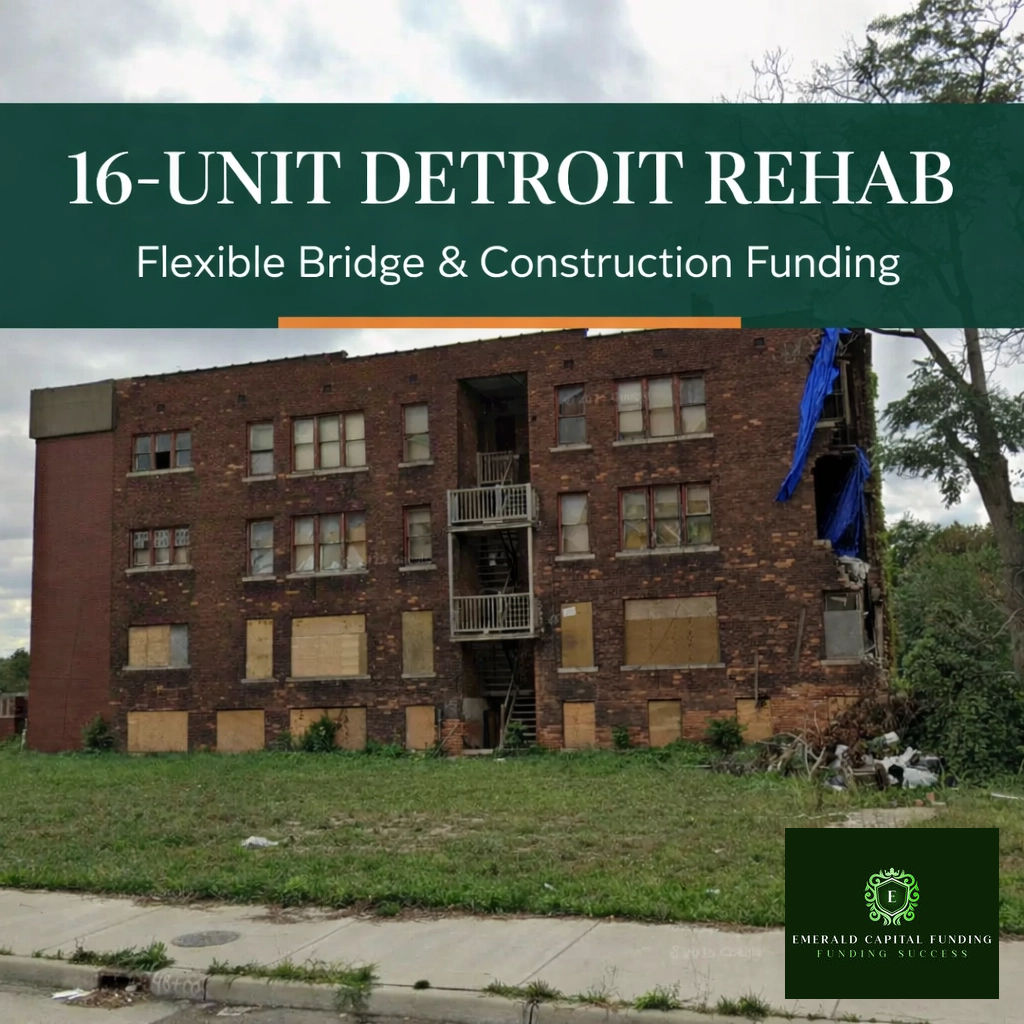
We’re talking about a 16-unit building, a true "diamond in the rough", that needed a team with vision and a lender who wasn’t afraid of a little grit. While traditional banks were busy checking boxes and saying "no" because of the property's condition or the location's history, we were looking at the numbers and the potential for a massive transformation.

The Detroit Opportunity: Why the Motor City is Purring

Before we dive into the nitty-gritty of the loan, let’s talk about why Detroit is such a hotspot for investors right now. For years, Detroit was the city everyone loved to count out. But if you’ve been on the ground there lately, you know the narrative has changed. There is a massive revitalization happening, fueled by both massive corporate investment and grassroots neighborhood stabilization.

For an investor, Detroit offers something that’s getting harder to find in markets like Austin or Tampa: yield. You can still find substantial buildings at a cost basis that allows for significant "forced appreciation" through renovation. When you find a 16-unit building that has good "bones" but looks like a disaster on the surface, you aren't looking at a headache, you’re looking at a goldmine. This guide will equip you with the knowledge of how we view these deals so you can spot your own Motor City miracle.

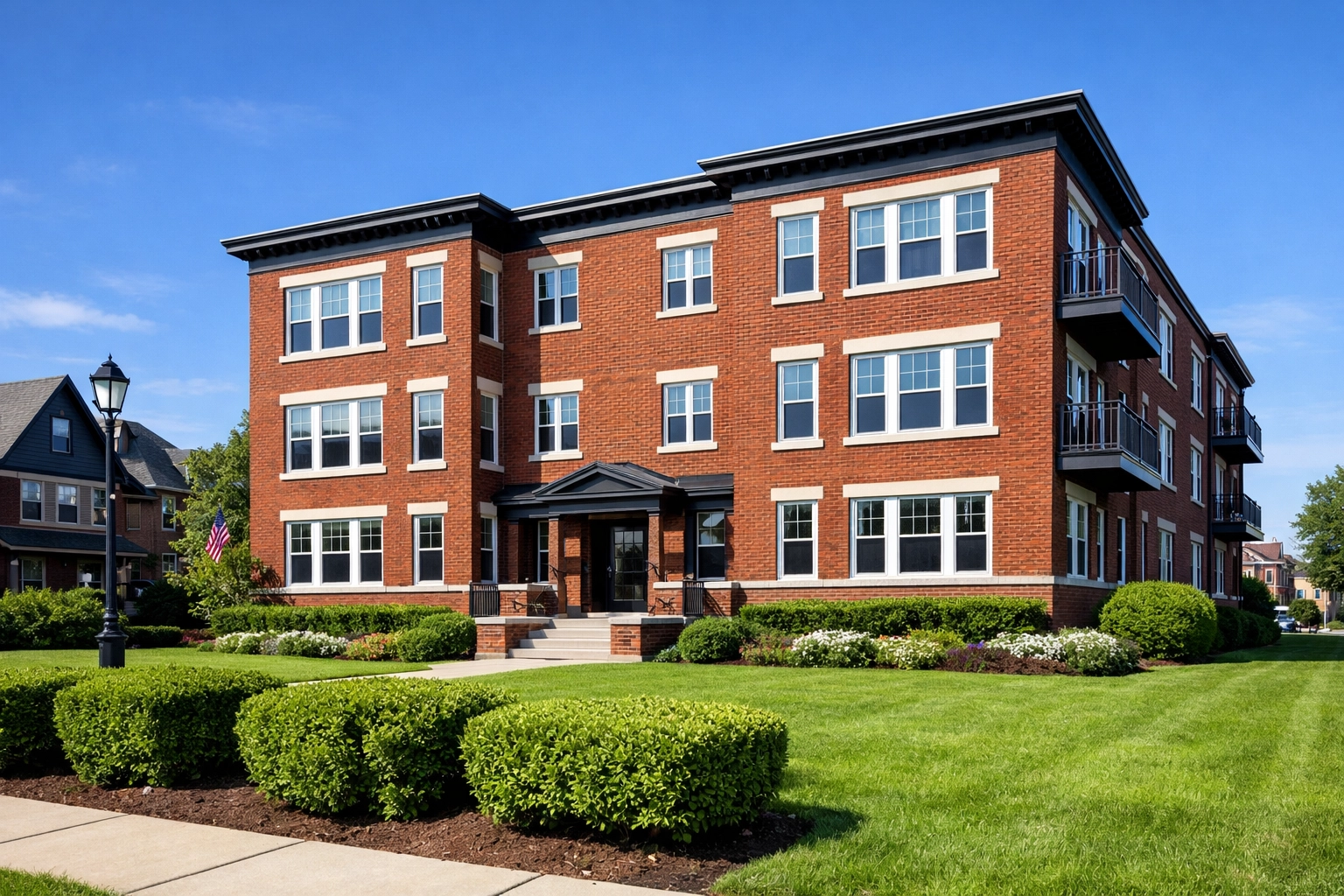
Classic 16-unit brick multifamily property in Detroit, a prime real estate investment project.

The Challenge: Why Traditional Banks Walk Away

When our client brought us this 16-unit Detroit project, they had already hit a few brick walls. Most traditional lenders and local banks have a very rigid set of criteria. They want properties that are already stabilized, 90% occupied, and in pristine condition.

This building was none of those things. It needed a complete overhaul, new systems, roof work, and a total interior face-lift for every unit. Traditional banks see that as "too much risk." They see the 16 units and the heavy rehab and they head for the hills.

But at Emerald Capital Funding, we understand that the value isn't just in what the property is today, but what it will be once the dust settles. That’s where our specialized bridge-to-rehab construction loans come into play. We don't just look at the purchase price; we look at the total project cost.

The Secret Sauce: Understanding 90% LTC Math

The headline of this deal is the 90% LTC (Loan-to-Cost). If you’re used to putting down 20% or 25% on a property, 90% LTC might sound like a dream. But in the world of professional debt, it's a strategic tool.

LTC refers to the total amount we are willing to lend based on the purchase price plus the renovation budget. For this 16-unit Detroit deal, we funded 90% of the total cost. This meant the investor was able to keep a massive amount of their own capital in their pocket to use for other deals or as a safety net.

If you want to dive deeper into how this math works, check out our guide on fix and flip secrets revealed: the LTC math expert lenders use.

Actionable Takeaway: When scaling to 16 units, your cash is your most valuable resource. Using a 90% LTC bridge loan allows you to control a multimillion-dollar asset with a relatively small down payment, maximizing your Return on Equity (ROE).

Financial growth chart on a tablet beside blueprints, illustrating 90% LTC bridge loan strategy.

Scaling Up: When You Cross the Commercial Line

There’s a big psychological jump when you move from 4 units (residential) to 5+ units (commercial). Once you hit 16 units, the rules of the game change. You’re no longer just a landlord; you’re a business operator.

The beauty of a 16-unit building is the economy of scale. You have one roof, one plot of land, and 16 streams of income. If one tenant moves out, your occupancy only drops by 6%. If a tenant moves out of a duplex, you’re 50% vacant. See the difference?

We specialize in multifamily DSCR loans for 5+ units, and we helped this investor understand how the valuation of their Detroit property would shift from "comparable sales" to "Net Operating Income (NOI)." By renovating the units and raising the rents to market rates, the investor isn't just making the building prettier, they are exponentially increasing its appraised value.

The Strategy: Bridge-to-Rehab to Long-Term Wealth

The path to success with a deal like this follows a specific, logical progression:

  1. Acquisition & Rehab: Use a bridge loan to secure the property and fund the construction.
  2. Execution: Complete the renovations on time and on budget (check out these common fix-flip mistakes to stay on track).
  3. Lease-Up: Get those 16 units filled with qualified tenants.
  4. The Exit: Once the building is stabilized and the value has "popped," you refinance out of the bridge loan and into a long-term, low-interest DSCR loan.

This is essentially a "BRRRR" strategy on steroids. We call it the 90-day BRRRR timeline, though with 16 units, the rehab might take a bit longer. The goal remains the same: pull your original investment back out and hold the asset for long-term cash flow.

Renovated interior of a Detroit multifamily unit showcasing successful apartment rehab results.

Q&A: Your Detroit Multifamily Questions Answered

Q: Is Detroit really safe for a large-scale investment?
A: Like any major city, Detroit is block-by-block. We look at the specific neighborhood data. The areas where we are seeing 16-unit buildings being renovated are often seeing massive "path of progress" momentum. With the right local property management, these assets are performing incredibly well.

Q: Why would Emerald Capital Funding offer 90% LTC when a bank won't?
A: We are asset-based lenders. We care more about the property’s potential and your experience than your personal tax returns. We’ve got you covered because we understand the real estate, not just the paperwork. You can learn more about why your tax returns don't matter for DSCR qualification here.

Q: What happens if the rehab costs go over budget?
A: Don't worry, we build contingency plans into our loans. However, we always recommend having a "rainy day" fund. The goal of the 90% LTC is to keep your cash liquid so you can handle those unexpected "Detroit surprises" that old buildings sometimes throw at you.

Q: Do I need a different loan for the rehab versus the purchase?
A: Nope! We wrap them into one "Bridge-to-Rehab" product. It’s one closing, one set of fees, and a whole lot less stress. Check out our loan cheat sheet to see which one fits your next deal.

Your Path to Scaling Big

Success in real estate is within your reach, but it requires the right leverage. This 16-unit Detroit deal is proof that you don't need to have millions in the bank to take down large-scale commercial projects. You just need a solid plan, a great property, and a lending partner like Emerald Capital Funding that understands how to bridge the gap between "as-is" and "stabilized."

Actionable Takeaways for Your Next Deal:

  • Look for "un-bankable" deals: Properties that need work often have the highest upside.
  • Focus on the LTC: Prioritize high-leverage loans that preserve your cash for renovations and reserves.
  • Think in Units: If you can do a 4-unit, you can do a 16-unit. The systems are similar, but the rewards are much higher.
  • Partner with experts: Work with lenders who know the Detroit market and understand multifamily dynamics.

Real estate investor and lender partnering to scale a Detroit multifamily property portfolio.

Ready to Fund Your Own "Diamond in the Rough"?

Whether you’re looking at a 16-unit building in Detroit or a 5-unit apartment in your own backyard, we’re here to help you navigate the financing. At Emerald Capital Funding, we don't just provide capital; we provide the strategy you need to scale your portfolio and achieve your financial goals.

Don't let a "no" from a traditional bank stop your momentum. Let’s talk about your next project and see if we can get you that 90% LTC you need to make the numbers work.

Contact Bill Nicholson and the Emerald Capital Funding team today!

Let’s turn that "diamond in the rough" into your next powerhouse asset. With the right approach and the right funding, your pathway to financial security is closer than you think. Together, we’ve got this!

Real Deal Highlight: The Buffalo BRRRR – Scaling with a 6-Unit Multi-Family Transformation

If you’re considering taking your real estate game to the next level, you’ve probably heard of the BRRRR method. But while most people start with a single-family home or a small duplex, the real magic happens when you scale. Welcome to the world of multi-family investing, where the numbers get bigger, the equity grows faster, and the cash flow becomes life-changing.

Today, I want to take you behind the scenes of a recent deal we funded right in the heart of Buffalo, New York. This wasn’t just a simple paint-and-carpet job; it was a full-scale transformation of a 6-unit multi-family property. By leveraging our flexible bridge loans and transitioning into a long-term DSCR refinance, this investor was able to execute the perfect BRRRR (Buy, Rehab, Rent, Refinance, Repeat) strategy.

At Emerald Capital Funding, we love seeing our clients win. This Buffalo deal is a prime example of how the right financing partner can help you scale your portfolio without the typical headaches of big-bank red tape.

Why Buffalo? The Rust Belt’s Golden Opportunity

Before we dive into the numbers, let’s talk about why Buffalo is currently a hotspot for investors. While everyone is looking at Florida or Texas, savvy investors are finding massive value in the "Rust Belt." Buffalo offers a unique combination of affordable entry points and a strong rental market.

With a growing medical corridor and a revitalized downtown, the demand for quality housing is through the roof. For this 6-unit deal, the investor saw an opportunity to take a distressed asset in a solid neighborhood and turn it into a high-performing rental.

When you’re looking at multi-family properties, Buffalo provides a "yield play" that’s hard to find in more expensive coastal markets. But to make it work, you need a lender who understands the local landscape and isn’t afraid of a little renovation work.

A classic brick 6-unit multi-family property in Buffalo, NY, showing high investment potential.

Phase 1: The Buy – Securing the Property with 90% LTC

The investor found this 6-unit property in a state of neglect. Several units were vacant, and the ones that were occupied were severely under-rented. The purchase price was attractive, but it required significant capital for both the acquisition and the massive rehab.

This is where many investors get stuck. Traditional banks often shy away from properties with high vacancy rates or significant repair needs. They want "turnkey." We want "potential."

We stepped in with a Bridge Loan (also known as a Fix and Flip loan). Here is how we structured the initial phase:

  • 90% LTC (Loan to Cost): We provided 90% of the purchase price and 100% of the renovation budget. This allowed the investor to keep more of their own cash in their pocket for other opportunities.
  • Speed of Execution: In the competitive Buffalo market, you can't wait 60 days for a bank. We closed quickly so the investor didn't lose the deal.
  • Interest-Only Payments: During the rehab phase, the investor only paid interest on the funds drawn, keeping monthly holding costs manageable.

Actionable Takeaway: When searching for your next deal, don’t let a lack of "traditional" financing stop you. Look for bridge loans that offer high LTC (Loan to Cost) to maximize your leverage.

Phase 2: The Rehab – Adding Massive Value

A 6-unit building is a different beast than a single-family home. You aren't just fixing one kitchen; you're coordinating six. The investor’s plan involved:

  1. Full gut renovations of the vacant units.
  2. Updated electrical and plumbing systems to ensure long-term stability.
  3. Cosmetic upgrades to the exterior to increase "curb appeal" and tenant quality.

By improving the property’s condition, the investor wasn't just making it look better, they were forcing appreciation. In the commercial and multi-family world, value is driven by Net Operating Income (NOI). Better units lead to higher rents, which leads to a higher property value.

Modern renovated kitchen with white shaker cabinets in a Buffalo multi-family rental property.

Phase 3: The Rent – Stabilizing the Asset

Once the units were beautiful, the investor didn't have any trouble finding tenants. In fact, they were able to increase the average rent per unit by nearly 40% compared to the previous owner’s rates.

Stabilization is a critical part of the BRRRR method. To qualify for the best long-term refinancing rates, lenders want to see that the property is occupied and generating income. With all six units leased to qualified tenants, the property’s value skyrocketed from its initial purchase price.

Phase 4: The Refinance – The Power of DSCR Loans

This is the stage where the "magic" happens. After the rehab was complete and the units were rented, it was time to move out of the short-term bridge loan and into a long-term, low-interest solution.

We transitioned the client into a DSCR Loan (Debt Service Coverage Ratio). If you aren't familiar with these, you can check out our guide on DSCR loans explained.

Here is why DSCR was the perfect fit for this Buffalo 6-unit:

  • No Personal Income Verification: We didn't ask for W2s, pay stubs, or tax returns. We cared about the property’s ability to cover the mortgage, not the investor’s personal salary.
  • 75-80% LTV Refinance: Based on the new, much higher appraisal (the After Repair Value), we were able to provide a cash-out refinance.
  • The "Infinite Return": The investor was able to pull out their original down payment plus the rehab costs. Essentially, they now own a 6-unit building with zero of their own money left in the deal.

With that capital back in their bank account, they were ready for the final 'R', Repeat.

Investor holding keys to a successful multi-family BRRRR project after a DSCR cash-out refinance.

Why Emerald Capital Funding?

Whether you are in Buffalo, NY, or anywhere else across the country, we've got you covered. We specialize in helping real estate investors scale through smart, flexible debt. Here is what we bring to the table:

  1. Nationwide Coverage: We lend in almost every state, meaning you can find a deal anywhere and know we can fund it.
  2. Flexible Bridge Loans: Our services include high-leverage bridge loans that cover up to 90% of your costs.
  3. No DTI Requirements: We focus on the deal. Your personal debt-to-income ratio doesn't stop you from getting a loan with us.
  4. Expertise in Multi-Family: We understand the nuances of 5+ unit properties, which are often treated differently than 1-4 unit residentials.

Q&A: Common Questions About Multi-Family BRRRRs

Q: Can I use a DSCR loan for a 6-unit property?
A: Yes! While many people think DSCR is only for 1-4 unit properties, we offer DSCR and small-balance commercial products specifically for multi-family buildings like this one in Buffalo.

Q: Do I need a lot of experience to get a 90% LTC bridge loan?
A: Experience certainly helps and can get you better rates, but we work with investors at all levels. Our goal is to see a solid plan and a property with potential.

Q: How long does the "seasoning" period take before I can refinance?
A: This varies, but many of our programs allow for refinancing in as little as 3 to 6 months after the initial purchase, provided the rehab is complete and the property is stabilized.

Q: Why choose a bridge loan instead of a traditional bank loan?
A: Speed and flexibility. Traditional banks often won't touch a property that isn't already "habitable" or fully leased. Bridge loans allow you to buy the "ugly" house (or apartment building), fix it, and then go to a traditional or DSCR lender once the value is there.

Actionable Takeaways for Your Next Deal

If you’re inspired by the Buffalo BRRRR, here is how you can start your own journey:

  • Step 1: Focus on the "Add-Value" – Look for properties with below-market rents or manageable physical distress.
  • Step 2: Get Pre-Approved – Don’t wait until you find a deal to talk to a lender. Contact us today to see what you qualify for.
  • Step 3: Run Your Numbers Conservatively – Always account for a "cushion" in your rehab budget and timeline.
  • Step 4: Leverage DSCR for Long-Term Wealth – Use DSCR loans to scale your portfolio without hitting the "DTI wall" that stops most investors at 10 properties.

Ready to Scale Your Portfolio?

At Emerald Capital Funding, we aren't just a faceless lender. We are your partners in growth. Whether you are looking at a 6-unit in Buffalo or a single-family flip in Dallas, we have the tools and the expertise to help you cross the finish line.

Success is within your reach, and with the right approach, you can achieve your financial goals faster than you ever thought possible.

Are you ready to fund your next big deal?

Apply Now to get started!

Don't let the lack of capital hold you back from your next multi-family transformation. Let's make your real estate dreams a reality together. If you want to learn more about who we are and our mission, feel free to visit our About Us page. We look forward to working with you!

Real Deal Highlight: Scaling Big in Detroit – 16 Units and 90% LTC

If you’re considering making a move into the multifamily space, you’ve probably heard a lot of noise about where the "smart money" is going. Welcome to the world of high-leverage commercial investing, where we stop looking at single-family houses and start looking at entire city blocks. I’m Bill Nicholson, and today I want to pull back the curtain on a recent project we funded in Detroit that perfectly illustrates how we do things differently here at Emerald Capital Funding.

We’re talking about a 16-unit building, a true "diamond in the rough", that needed a team with vision and a lender who wasn’t afraid of a little grit. While traditional banks were busy checking boxes and saying "no" because of the property's condition or the location's history, we were looking at the numbers and the potential for a massive transformation.

The Detroit Opportunity: Why the Motor City is Purring

Before we dive into the nitty-gritty of the loan, let’s talk about why Detroit is such a hotspot for investors right now. For years, Detroit was the city everyone loved to count out. But if you’ve been on the ground there lately, you know the narrative has changed. There is a massive revitalization happening, fueled by both massive corporate investment and grassroots neighborhood stabilization.

For an investor, Detroit offers something that’s getting harder to find in markets like Austin or Tampa: yield. You can still find substantial buildings at a cost basis that allows for significant "forced appreciation" through renovation. When you find a 16-unit building that has good "bones" but looks like a disaster on the surface, you aren't looking at a headache, you’re looking at a goldmine. This guide will equip you with the knowledge of how we view these deals so you can spot your own Motor City miracle.

Classic 16-unit brick multifamily property in Detroit, a prime real estate investment project.

The Challenge: Why Traditional Banks Walk Away

When our client brought us this 16-unit Detroit project, they had already hit a few brick walls. Most traditional lenders and local banks have a very rigid set of criteria. They want properties that are already stabilized, 90% occupied, and in pristine condition.

This building was none of those things. It needed a complete overhaul, new systems, roof work, and a total interior face-lift for every unit. Traditional banks see that as "too much risk." They see the 16 units and the heavy rehab and they head for the hills.

But at Emerald Capital Funding, we understand that the value isn't just in what the property is today, but what it will be once the dust settles. That’s where our specialized bridge-to-rehab construction loans come into play. We don't just look at the purchase price; we look at the total project cost.

The Secret Sauce: Understanding 90% LTC Math

The headline of this deal is the 90% LTC (Loan-to-Cost). If you’re used to putting down 20% or 25% on a property, 90% LTC might sound like a dream. But in the world of professional debt, it's a strategic tool.

LTC refers to the total amount we are willing to lend based on the purchase price plus the renovation budget. For this 16-unit Detroit deal, we funded 90% of the total cost. This meant the investor was able to keep a massive amount of their own capital in their pocket to use for other deals or as a safety net.

If you want to dive deeper into how this math works, check out our guide on fix and flip secrets revealed: the LTC math expert lenders use.

Actionable Takeaway: When scaling to 16 units, your cash is your most valuable resource. Using a 90% LTC bridge loan allows you to control a multimillion-dollar asset with a relatively small down payment, maximizing your Return on Equity (ROE).

Financial growth chart on a tablet beside blueprints, illustrating 90% LTC bridge loan strategy.

Scaling Up: When You Cross the Commercial Line

There’s a big psychological jump when you move from 4 units (residential) to 5+ units (commercial). Once you hit 16 units, the rules of the game change. You’re no longer just a landlord; you’re a business operator.

The beauty of a 16-unit building is the economy of scale. You have one roof, one plot of land, and 16 streams of income. If one tenant moves out, your occupancy only drops by 6%. If a tenant moves out of a duplex, you’re 50% vacant. See the difference?

We specialize in multifamily DSCR loans for 5+ units, and we helped this investor understand how the valuation of their Detroit property would shift from "comparable sales" to "Net Operating Income (NOI)." By renovating the units and raising the rents to market rates, the investor isn't just making the building prettier, they are exponentially increasing its appraised value.

The Strategy: Bridge-to-Rehab to Long-Term Wealth

The path to success with a deal like this follows a specific, logical progression:

  1. Acquisition & Rehab: Use a bridge loan to secure the property and fund the construction.
  2. Execution: Complete the renovations on time and on budget (check out these common fix-flip mistakes to stay on track).
  3. Lease-Up: Get those 16 units filled with qualified tenants.
  4. The Exit: Once the building is stabilized and the value has "popped," you refinance out of the bridge loan and into a long-term, low-interest DSCR loan.

This is essentially a "BRRRR" strategy on steroids. We call it the 90-day BRRRR timeline, though with 16 units, the rehab might take a bit longer. The goal remains the same: pull your original investment back out and hold the asset for long-term cash flow.

Renovated interior of a Detroit multifamily unit showcasing successful apartment rehab results.

Q&A: Your Detroit Multifamily Questions Answered

Q: Is Detroit really safe for a large-scale investment?
A: Like any major city, Detroit is block-by-block. We look at the specific neighborhood data. The areas where we are seeing 16-unit buildings being renovated are often seeing massive "path of progress" momentum. With the right local property management, these assets are performing incredibly well.

Q: Why would Emerald Capital Funding offer 90% LTC when a bank won't?
A: We are asset-based lenders. We care more about the property’s potential and your experience than your personal tax returns. We’ve got you covered because we understand the real estate, not just the paperwork. You can learn more about why your tax returns don't matter for DSCR qualification here.

Q: What happens if the rehab costs go over budget?
A: Don't worry, we build contingency plans into our loans. However, we always recommend having a "rainy day" fund. The goal of the 90% LTC is to keep your cash liquid so you can handle those unexpected "Detroit surprises" that old buildings sometimes throw at you.

Q: Do I need a different loan for the rehab versus the purchase?
A: Nope! We wrap them into one "Bridge-to-Rehab" product. It’s one closing, one set of fees, and a whole lot less stress. Check out our loan cheat sheet to see which one fits your next deal.

Your Path to Scaling Big

Success in real estate is within your reach, but it requires the right leverage. This 16-unit Detroit deal is proof that you don't need to have millions in the bank to take down large-scale commercial projects. You just need a solid plan, a great property, and a lending partner like Emerald Capital Funding that understands how to bridge the gap between "as-is" and "stabilized."

Actionable Takeaways for Your Next Deal:

  • Look for "un-bankable" deals: Properties that need work often have the highest upside.
  • Focus on the LTC: Prioritize high-leverage loans that preserve your cash for renovations and reserves.
  • Think in Units: If you can do a 4-unit, you can do a 16-unit. The systems are similar, but the rewards are much higher.
  • Partner with experts: Work with lenders who know the Detroit market and understand multifamily dynamics.

Real estate investor and lender partnering to scale a Detroit multifamily property portfolio.

Ready to Fund Your Own "Diamond in the Rough"?

Whether you’re looking at a 16-unit building in Detroit or a 5-unit apartment in your own backyard, we’re here to help you navigate the financing. At Emerald Capital Funding, we don't just provide capital; we provide the strategy you need to scale your portfolio and achieve your financial goals.

Don't let a "no" from a traditional bank stop your momentum. Let’s talk about your next project and see if we can get you that 90% LTC you need to make the numbers work.

Contact Bill Nicholson and the Emerald Capital Funding team today!

Let’s turn that "diamond in the rough" into your next powerhouse asset. With the right approach and the right funding, your pathway to financial security is closer than you think. Together, we’ve got this!

Real Deal Highlight: The Buffalo BRRRR – Scaling with a 6-Unit Multi-Family Transformation

If you’re considering taking your real estate game to the next level, you’ve probably heard of the BRRRR method. But while most people start with a single-family home or a small duplex, the real magic happens when you scale. Welcome to the world of multi-family investing, where the numbers get bigger, the equity grows faster, and the cash flow becomes life-changing.

Today, I want to take you behind the scenes of a recent deal we funded right in the heart of Buffalo, New York. This wasn’t just a simple paint-and-carpet job; it was a full-scale transformation of a 6-unit multi-family property. By leveraging our flexible bridge loans and transitioning into a long-term DSCR refinance, this investor was able to execute the perfect BRRRR (Buy, Rehab, Rent, Refinance, Repeat) strategy.

At Emerald Capital Funding, we love seeing our clients win. This Buffalo deal is a prime example of how the right financing partner can help you scale your portfolio without the typical headaches of big-bank red tape.

Why Buffalo? The Rust Belt’s Golden Opportunity

Before we dive into the numbers, let’s talk about why Buffalo is currently a hotspot for investors. While everyone is looking at Florida or Texas, savvy investors are finding massive value in the "Rust Belt." Buffalo offers a unique combination of affordable entry points and a strong rental market.

With a growing medical corridor and a revitalized downtown, the demand for quality housing is through the roof. For this 6-unit deal, the investor saw an opportunity to take a distressed asset in a solid neighborhood and turn it into a high-performing rental.

When you’re looking at multi-family properties, Buffalo provides a "yield play" that’s hard to find in more expensive coastal markets. But to make it work, you need a lender who understands the local landscape and isn’t afraid of a little renovation work.

A classic brick 6-unit multi-family property in Buffalo, NY, showing high investment potential.

Phase 1: The Buy – Securing the Property with 90% LTC

The investor found this 6-unit property in a state of neglect. Several units were vacant, and the ones that were occupied were severely under-rented. The purchase price was attractive, but it required significant capital for both the acquisition and the massive rehab.

This is where many investors get stuck. Traditional banks often shy away from properties with high vacancy rates or significant repair needs. They want "turnkey." We want "potential."

We stepped in with a Bridge Loan (also known as a Fix and Flip loan). Here is how we structured the initial phase:

  • 90% LTC (Loan to Cost): We provided 90% of the purchase price and 100% of the renovation budget. This allowed the investor to keep more of their own cash in their pocket for other opportunities.
  • Speed of Execution: In the competitive Buffalo market, you can't wait 60 days for a bank. We closed quickly so the investor didn't lose the deal.
  • Interest-Only Payments: During the rehab phase, the investor only paid interest on the funds drawn, keeping monthly holding costs manageable.

Actionable Takeaway: When searching for your next deal, don’t let a lack of "traditional" financing stop you. Look for bridge loans that offer high LTC (Loan to Cost) to maximize your leverage.

Phase 2: The Rehab – Adding Massive Value

A 6-unit building is a different beast than a single-family home. You aren't just fixing one kitchen; you're coordinating six. The investor’s plan involved:

  1. Full gut renovations of the vacant units.
  2. Updated electrical and plumbing systems to ensure long-term stability.
  3. Cosmetic upgrades to the exterior to increase "curb appeal" and tenant quality.

By improving the property’s condition, the investor wasn't just making it look better, they were forcing appreciation. In the commercial and multi-family world, value is driven by Net Operating Income (NOI). Better units lead to higher rents, which leads to a higher property value.

Modern renovated kitchen with white shaker cabinets in a Buffalo multi-family rental property.

Phase 3: The Rent – Stabilizing the Asset

Once the units were beautiful, the investor didn't have any trouble finding tenants. In fact, they were able to increase the average rent per unit by nearly 40% compared to the previous owner’s rates.

Stabilization is a critical part of the BRRRR method. To qualify for the best long-term refinancing rates, lenders want to see that the property is occupied and generating income. With all six units leased to qualified tenants, the property’s value skyrocketed from its initial purchase price.

Phase 4: The Refinance – The Power of DSCR Loans

This is the stage where the "magic" happens. After the rehab was complete and the units were rented, it was time to move out of the short-term bridge loan and into a long-term, low-interest solution.

We transitioned the client into a DSCR Loan (Debt Service Coverage Ratio). If you aren't familiar with these, you can check out our guide on DSCR loans explained.

Here is why DSCR was the perfect fit for this Buffalo 6-unit:

  • No Personal Income Verification: We didn't ask for W2s, pay stubs, or tax returns. We cared about the property’s ability to cover the mortgage, not the investor’s personal salary.
  • 75-80% LTV Refinance: Based on the new, much higher appraisal (the After Repair Value), we were able to provide a cash-out refinance.
  • The "Infinite Return": The investor was able to pull out their original down payment plus the rehab costs. Essentially, they now own a 6-unit building with zero of their own money left in the deal.

With that capital back in their bank account, they were ready for the final 'R', Repeat.

Investor holding keys to a successful multi-family BRRRR project after a DSCR cash-out refinance.

Why Emerald Capital Funding?

Whether you are in Buffalo, NY, or anywhere else across the country, we've got you covered. We specialize in helping real estate investors scale through smart, flexible debt. Here is what we bring to the table:

  1. Nationwide Coverage: We lend in almost every state, meaning you can find a deal anywhere and know we can fund it.
  2. Flexible Bridge Loans: Our services include high-leverage bridge loans that cover up to 90% of your costs.
  3. No DTI Requirements: We focus on the deal. Your personal debt-to-income ratio doesn't stop you from getting a loan with us.
  4. Expertise in Multi-Family: We understand the nuances of 5+ unit properties, which are often treated differently than 1-4 unit residentials.

Q&A: Common Questions About Multi-Family BRRRRs

Q: Can I use a DSCR loan for a 6-unit property?
A: Yes! While many people think DSCR is only for 1-4 unit properties, we offer DSCR and small-balance commercial products specifically for multi-family buildings like this one in Buffalo.

Q: Do I need a lot of experience to get a 90% LTC bridge loan?
A: Experience certainly helps and can get you better rates, but we work with investors at all levels. Our goal is to see a solid plan and a property with potential.

Q: How long does the "seasoning" period take before I can refinance?
A: This varies, but many of our programs allow for refinancing in as little as 3 to 6 months after the initial purchase, provided the rehab is complete and the property is stabilized.

Q: Why choose a bridge loan instead of a traditional bank loan?
A: Speed and flexibility. Traditional banks often won't touch a property that isn't already "habitable" or fully leased. Bridge loans allow you to buy the "ugly" house (or apartment building), fix it, and then go to a traditional or DSCR lender once the value is there.

Actionable Takeaways for Your Next Deal

If you’re inspired by the Buffalo BRRRR, here is how you can start your own journey:

  • Step 1: Focus on the "Add-Value" – Look for properties with below-market rents or manageable physical distress.
  • Step 2: Get Pre-Approved – Don’t wait until you find a deal to talk to a lender. Contact us today to see what you qualify for.
  • Step 3: Run Your Numbers Conservatively – Always account for a "cushion" in your rehab budget and timeline.
  • Step 4: Leverage DSCR for Long-Term Wealth – Use DSCR loans to scale your portfolio without hitting the "DTI wall" that stops most investors at 10 properties.

Ready to Scale Your Portfolio?

At Emerald Capital Funding, we aren't just a faceless lender. We are your partners in growth. Whether you are looking at a 6-unit in Buffalo or a single-family flip in Dallas, we have the tools and the expertise to help you cross the finish line.

Success is within your reach, and with the right approach, you can achieve your financial goals faster than you ever thought possible.

Are you ready to fund your next big deal?

Apply Now to get started!

Don't let the lack of capital hold you back from your next multi-family transformation. Let's make your real estate dreams a reality together. If you want to learn more about who we are and our mission, feel free to visit our About Us page. We look forward to working with you!